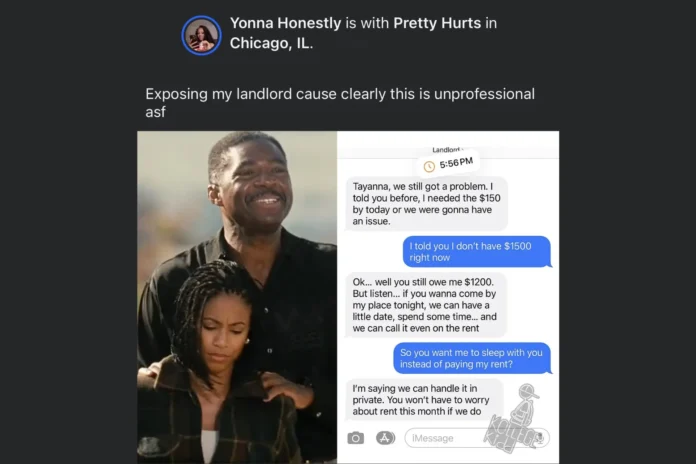
A Chicago woman’s struggle to pay rent took a disturbing turn when her landlord allegedly suggested a sexual arrangement to cover the debt. The woman, identified as Tayanna, exposed the landlord in a viral X post after he proposed she visit his place for a “little date” to waive her rent. The text exchange has sparked widespread outrage and highlights the power imbalances many tenants face in Chicago’s housing market.
In a screenshot shared by the account @KollegeKidd on August 15, 2024, Tayanna informed her landlord she couldn’t afford her $1,500 rent. The landlord, noting she had a remaining balance of $1,200, replied,
“If you wanna come by my place tonight, we can have a little date, spend some time… and we can call it even on the rent.”
Tayanna directly confronted him, asking,
“So you want me to sleep with you instead of paying my rent?”
The landlord’s response—
“I’m saying we can handle it in private. You won’t have to worry about rent this month if we do”
—was condemned online as predatory and highly unprofessional. This incident of alleged Chicago landlord harassment has resonated with thousands.
This incident points to a broader, troubling pattern of landlord misconduct. The city’s Fair Housing Ordinance explicitly prohibits sexual harassment, including unwelcome advances and any form of a rent for sex scheme. This behavior is unethical and illegal, and landlords can face significant penalties, including fines and lawsuits. In one notable past case, a Chicago property owner was ordered to pay $180,000 in damages for targeting female tenants with similar inappropriate propositions.
The city’s difficult housing landscape compounds the issue of Chicago landlord harassment. A recent investigation revealed thousands of renters living in unsafe apartments, particularly in majority-Black neighborhoods, while also facing steep rent hikes. Tenants like Tayanna, who are struggling financially, become especially vulnerable to exploitation. While laws protecting tenant rights Illinois exist, many are unaware of the resources available.
Protections like the Illinois Landlord Retaliation Act bar landlords from punishing tenants who assert their rights. Furthermore, programs offering rental assistance are designed to help tenants in financial distress. However, as Tayanna’s experience shows, some landlords may try to bypass these legal channels with illegal and predatory offers. Her publicly sharing the story serves as a stark reminder for tenants to know their rights and for authorities to hold exploitative landlords accountable.