

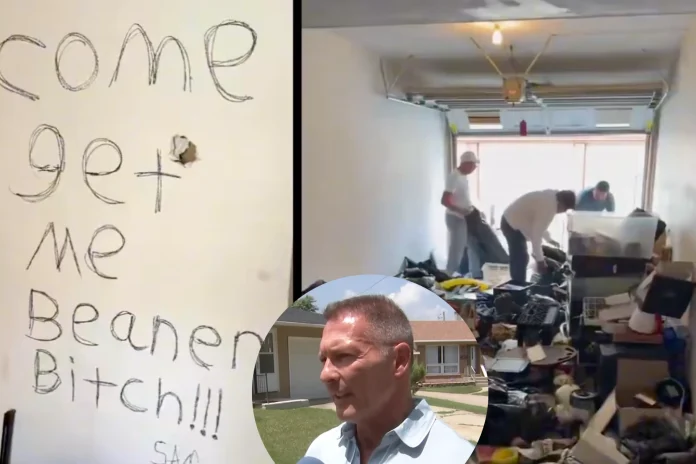
Irma Mendez, a veteran real estate broker with more than 20 years in the San Diego area, bought a boarded-up condo sight-unseen as part of a distressed foreclosure deal, planning to renovate and rent it out. What she found instead was an unwelcome surprise: a squatter who had broken in through a window and refused to leave.
The man quickly made himself comfortable in the vacant unit, turning it into what Mendez described as a disaster zone over the course of nearly 10 months. In a video she posted online — which has since gone viral with millions of views — Mendez documented piles of accumulated trash, ripped-up carpet, and walls covered in graffiti. The messages included profane taunts like “I pissed here” and “Come get me,” along with a racial slur directed at Mendez, reportedly calling her a “Beaner bitch” in reference to her Latina heritage. Evidence also showed he had thrown dead mice at the walls.
“This person just made himself at home,” Mendez said. “He went in there, put the SDG&E under his name, and his water is paid for under the HOA, so basically he had free housing. In essence, I am paying for his water while I’m paying the HOA fee while he is squatting in the property.”
Because the property is part of a homeowners association, Mendez remained responsible for the HOA fees that covered the water bill, while the squatter placed gas and electric utilities in his own name via an app. She even offered him a cash-for-keys deal to encourage a voluntary departure, but he declined and stayed put, reportedly showing up to court hearings at one point to argue for more time.
Removing the unauthorized occupant followed California’s standard unlawful detainer process: documenting the trespass and damage, serving notices, filing a lawsuit, attending hearings, securing a court order, and waiting for enforcement by the San Diego County Sheriff’s Department. The entire ordeal stretched nearly 10 months, reflecting broader backlogs in the region. Court data shows San Diego handled over 9,000 unlawful detainer filings in 2025, many processed with limited judicial resources.
In California, squatters — technically criminal trespassers with no lease or permission — are often treated as a civil matter once they establish occupancy. Property owners are generally barred from “self-help” remedies such as changing locks or cutting utilities without risking their own legal issues. While recent laws like SB 602 have aimed to strengthen tools for owners in certain trespass cases involving abandoned properties, removal in occupied units still frequently moves through the slower civil court system.
Squatters do not automatically gain tenant rights after 30 days, as some online myths suggest, and adverse possession — which could allow a claim to legal title — requires five continuous years of open and hostile occupancy plus paying property taxes, conditions far from being met in a 10-month period.
Once the sheriff’s deputies finally executed the removal, Mendez regained control of the unit, which she said was left in “pretty bad shape.” Significant cleaning, carpet replacement, wall repairs and other restoration work were needed before the condo could be rented out. Despite the legal fees, ongoing HOA payments, lost rental income and repair costs, Mendez has since completed the renovations, placed a new tenant in the property and purchased another similar distressed asset.
Mendez shared her experience widely on social media, including her Instagram account @irmamendezsellshomes, drawing attention to what many view as a system that can leave property owners bearing the financial and temporal burden while unauthorized occupants exploit vacancies. The story has fueled online frustration with California’s eviction processes, though outcomes can vary depending on locality, evidence and local enforcement practices.
The case serves as a cautionary example for investors eyeing distressed or vacant properties in the state. Experts recommend immediate documentation with photos and videos, filing police reports, consulting a landlord-tenant attorney right away, and securing properties with cameras and alarms where possible. Distressed deals like boarded-up foreclosures often limit pre-purchase inspections, adding inherent risks.
Mendez, undeterred by the ordeal, continues her work in the competitive San Diego real estate market.

