A wave of social media posts has set the hip-hop world buzzing with claims that Florida rapper Real Boston Richey born Jalen Taheen Foster and two co-defendants rejected plea deals, went to trial, and were found not guilty in a high-stakes federal drug and firearm case.
A tweet from X.
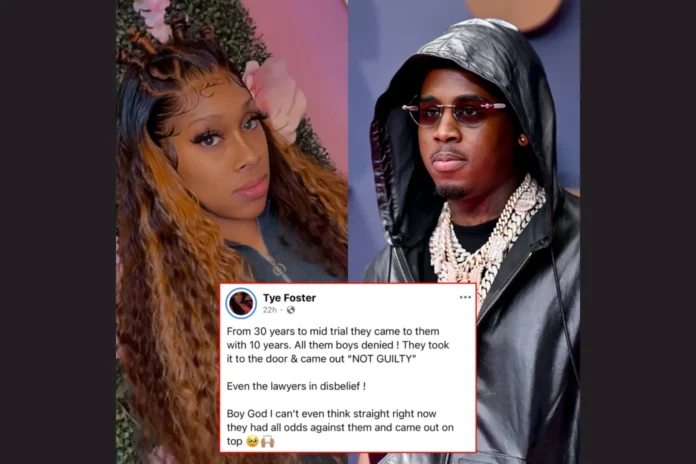
The story went viral after a post from MyMixtapez quoted Richey’s sister:
“Prosecutors initially offered him 30 years, then reduced it to 10 years during the trial. He and his co-defendants refused, went to trial, and were found ‘not guilty,’ leaving even the lawyers shocked.”
Hip-hop media such as Hot97, HotNewHipHop, and HypeFresh immediately blew up the news, eliciting joy from fans and suspicion from legal observers. Yet even though the news went viral, no official court records have come to verify the acquittal.
There actually is a federal lawsuit called United States v. Foster (Case No. 4:23-cr-00057, N.D. Florida). Court docket summaries confirm a superseding indictment in November 2023 when Richey and co-defendants Rayshun Taheus Foster and De’Anthony Jamari Swatzie were indicted for drug trafficking and weapons charges.
As convicted, Richey would have died in federal prison. The reported plea bargain in trimming a possible 30-year sentence to 10 years would be consistent with federal custom, in which the prosecution has commonly handed down lighter sentences in exchange for plea agreements.
However, while social media claims describe a stunning acquittal, the federal docket currently shows no official jury verdict or judgment entry. The U.S. Attorney’s Office has also not issued a press release confirming the outcome.
The claim that Boston Richey and his co-defendants rejected generous plea offers and still won at trial is striking because such an outcome would be extremely rare in the U.S. legal system. According to Pew Research, only about 0.4% of federal defendants went to trial and were acquitted in 2022, while data from the Bureau of Justice Statistics shows that roughly 90–95% of criminal cases are resolved through plea bargains. If confirmed, Richey’s case would represent an extraordinary legal victory but without official court filings or verified documentation, skepticism remains warranted.
The rapper’s legal issues extend beyond this federal case. In March 2025, Richey was accused of assaulting his pregnant ex-girlfriend, Tatiana “Chanell” Charles, outside a Houston nightclub.
According to police accounts, Charles blamed Richey for strangling her over and over and for threatening to kill her over a period of two hours. The charges resulted in his bond being overturned in April 2025, and he ended up in the hands of the Tallahassee Federal Correctional Institute for breaking pretrial prohibitions.
Parallel charges have also fueled public confusion, as some fans wonder how a “not guilty” verdict aligns with accounts of prolonged detention and unresolved charges.
As social media celebrates a dramatic victory in the courtroom for Boston Richey, no real court documents or DOJ statements confirm the acquittal.
The case underscores how viral posts can outpace verified information, especially in high-profile legal battles. Readers should rely on official dockets, DOJ press releases, and reputable reporting to confirm developments.
As of now, the verdict remains uncertain and the story continues to unfold.