

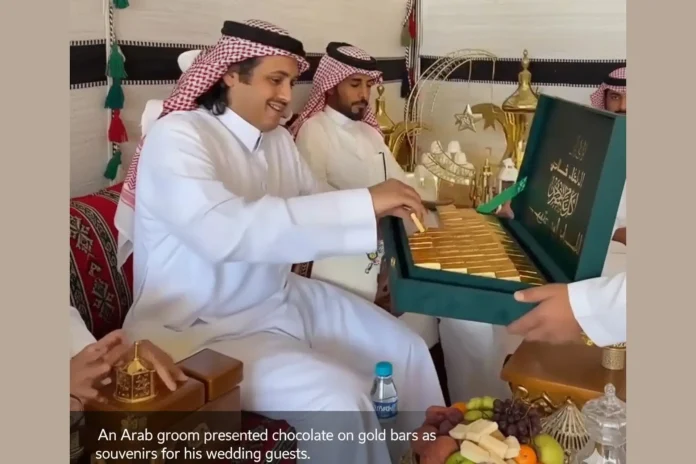
A viral video from a Saudi wedding captured global attention when guests received what looked like solid gold bars as souvenirs, but the gleaming gifts were actually premium chocolates wrapped in foil to mimic 24-karat ingots. The 33-second clip, posted on X today, shows a man believed to be the bride’s brother distributing the items to male attendees in a traditional majlis setting. This revelation shifted initial awe over apparent extravagance to amusement, highlighting how social media often amplifies cultural misunderstandings.
In the footage, men dressed in white thobes and red-checkered keffiyehs sit in rows inside a white tent adorned with golden coffee pots, trophies, and bottled refreshments. The distributor carries ornate green velvet boxes emblazoned with Arabic script and the Saudi emblem of crossed swords under a palm tree, opening them to reveal stacked rectangular bars embossed with “999.9” purity markings. He uses a small green ribbon or scoop to hand each one individually, ensuring hygienic and elegant presentation, while recipients nod appreciatively and occasionally smile or examine their gift. One lighthearted moment stands out when an older guest playfully grabs two bars, drawing subtle laughter from others, underscoring the warm, communal atmosphere.
These souvenirs, produced by luxury brands like Patchi, feature gianduja hazelnut filling and are a staple in Middle Eastern hospitality rituals known as karam. The practice stems from Islamic values emphasizing generosity and respect during life events like weddings, where gender-segregated receptions allow families to honor guests with symbolic tokens of prosperity. In this case, the chocolates serve the groom’s male relatives and friends, symbolizing abundance without the literal cost of precious metals, and align with broader Arab customs of gift exchanges during the milka ceremony. Such gestures foster social bonds and reflect the hosts’ status, turning everyday confections into memorable emblems of cultural pride.
The video’s spread across platforms like Instagram and YouTube has garnered millions of views, with reactions ranging from envy over perceived wealth to clarifications debunking the gold myth. Comments on the original X post include users noting the wrappers’ edible nature and others injecting humor or unrelated political commentary, illustrating how viral content can spark diverse interpretations.
From a journalistic perspective, this incident reveals the pitfalls of quick judgments in an era of rapid content sharing, where optical illusions like foil-wrapped treats can fuel narratives of excess in oil-rich nations. It also prompts reflection on authenticity in online storytelling, as initial claims of real gold biscuits gave way to verified details about affordable luxuries retailing for around $20 to $50 per box. Ultimately, the story celebrates human ingenuity in tradition, reminding us that true value often lies in the thought and symbolism behind a gift rather than its material worth. For more on Saudi wedding customs, explore resources from cultural experts, and view the original clip here.

