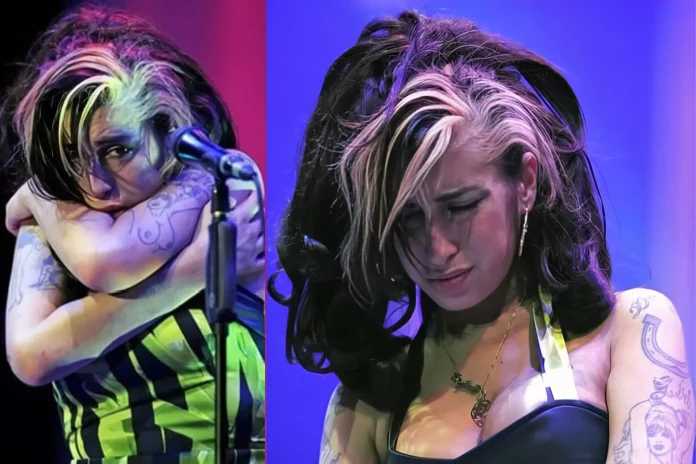
Amy Winehouse staggered onto the stage in Belgrade, Serbia, on June 18, 2011, her signature beehive slightly askew and her eyes betraying a storm of inner chaos, as she faced a sea of 20,000 fans whose cheers quickly soured into boos amid her slurred words and forgotten verses. What unfolded that night at Kalemegdan Fortress was not just a concert but a heartbreaking unraveling, where the soul singer’s intoxication led to a performance so disjointed that it inadvertently became her swan song, ending her live career before her tragic death from alcohol poisoning just over a month later at age 27. Though she never explicitly declared it her final show, the event’s fallout, tour cancellation and her deepening isolation, sealed its place as the last chapter in her public artistry, a moment driven by relentless personal demons and industry pressures that pushed her to the brink.
The chaos erupted from the outset when Winehouse, fresh from a brief rehab stint but reportedly relapsing hard, mistook Belgrade for Athens in her opening greeting, a foggy slip that foreshadowed the night’s descent. She fumbled through “Just Friends,” mangling lines like “Just friends, lovers no more, just friends, but not like before,” her voice, a once-vibrant blend of jazz grit and soulful depth, inherited from her father Mitch’s passion for standards, cracking into whispers over the band’s unwavering rhythm, which mirrored the familial beats she grew up with in his taxi rides filled with Frank Sinatra tunes. As boos swelled during “Back to Black,” with its poignant plea “We only said goodbye with words, I died a hundred times,” she clutched herself in a desperate self-embrace, scratching at her grandmother Cynthia’s memorial tattoo on her arm, her body language a silent scream of vulnerability while backup singers like Zalon Thompson propped her up, turning the stage into a makeshift lifeline amid the crowd’s growing demands for refunds.
This meltdown stemmed from a toxic brew of addiction, fame’s unyielding grip, and a tour she never wanted, having confided to friends her dread of performing sober after years of substance-fueled highs and lows. Her mental breakdown that night, visible in tear-streaked eyes and erratic pacing during “Some Unholy War” where she barely mustered “If my man was fighting some unholy war, I would be behind him,” was the culmination of battles with depression, bulimia, and heroin introduced by ex-husband Blake Fielder-Civil, compounded by her father’s failed interventions and promoters’ million-euro payday that prioritized spectacle over her fragile state. The show collapsed into silence during “Valerie,” a lively cover reduced to her wandering aimlessly, repeating band introductions wrong, as the audience’s frustration peaked; it wasn’t declared her last by choice, but fate intervened when the tour was axed, leaving her to retreat into solitude that ended fatally in her London home with lethal alcohol levels.
In piecing together this night, it becomes clear how Winehouse’s raw talent, which netted her five Grammys for “Back to Black” and an estate worth about $4.6 million passed to her parents, clashed with an industry that often exploits vulnerability for profit. Creatively reimagined, this wasn’t merely a bad gig but a poetic tragedy, where her lyrics about love’s losses mirrored her own unraveling, urging a reevaluation of how we support artists teetering on the edge. Her legacy, preserved in archived footage of the concert, transforms the boos into a collective lament for what could have been, highlighting the need for empathy in entertainment’s harsh glare.