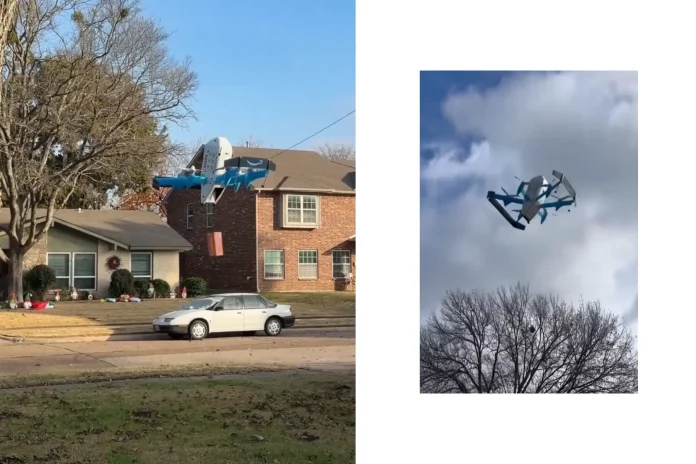
A persistent high-pitched buzz has turned the skies over Richardson, Texas, into a source of frustration just weeks after Amazon launched its Prime Air drone deliveries on December 4. Residents near the company’s fulfillment center report drones passing overhead dozens of times a day, creating a near-constant humming that disrupts the peace of their suburban neighborhoods. This emerging backlash highlights the real-world challenges of bringing futuristic delivery tech into everyday backyards.
One Richardson homeowner, Jonathan Pace, who works from home and values silence, shared his experience with the constant drone activity. He described the sound as a “mosquito buzzing in your ear,” adding that it is “just annoying enough to wear a person down.” Pace noted drones flying over his property throughout the day, mainly because neighbors are embracing the quick service.
“The near-constant humming of drones over my house is similar to a mosquito buzzing in your ear. It’s just annoying enough to wear a person down.”
Despite his complaints, Pace has tried the service himself and called it “pretty cool,” capturing the mixed feelings many locals have about this blend of convenience and disruption.
Amazon’s MK30 drones operate from the facility at 3051 Research Drive, delivering packages up to five pounds in under an hour within an eight-mile radius. These advanced models feature vertical takeoff, autonomous navigation with obstacle avoidance, and brief low-altitude hovers to drop items safely on tethers. The company engineered them with quieter propellers, reducing perceived noise by nearly half compared to previous versions, and they can even fly in light rain.
The rollout in Richardson is part of Amazon’s aggressive 2025 expansion across the U.S., aimed at slashing delivery times, easing road congestion, and curbing package theft. Federal Aviation Administration approvals enable beyond-visual-line-of-sight flights, but environmental reviews, including noise considerations, are required for such programs.
This situation echoes past issues in other Texas locations, where frequent flights amplified even moderate sounds, leading to community pushback. Amazon emphasizes its community outreach, including pre-launch meetings, and reports no formal complaints filed directly with them yet. Still, as order volumes rise, the frequency of flights could intensify resident concerns.

The debate highlights a broader question: how can cities integrate cutting-edge technology without compromising the quality of life? Solutions such as refined flight paths, stricter operating hours, or ongoing propeller improvements could help bridge the gap. For now, Richardson serves as a live test case for determining whether the benefits of drone delivery outweigh the hype.
For more on Prime Air, check Amazon’s official drone delivery page or the FAA’s unmanned aircraft systems resources.