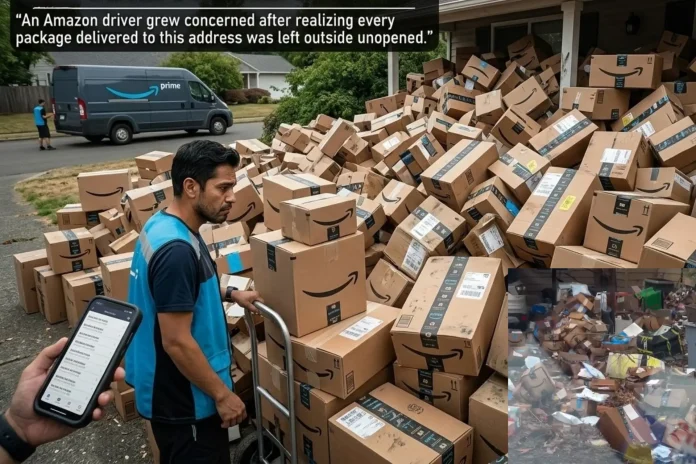
An Amazon delivery driver voiced alarm after arriving for a second delivery at a residential address and finding every prior package still sealed and stacked high enough to block the front door entirely. The 41 second handheld video shows the uniformed worker gesturing at the weathered pile while questioning occupancy and even raising the possibility of something more serious unfolding inside. No resident emerged during the stop and the driver left the new items on the steps anyway a moment that quickly went viral with thousands of views across platforms.
Extensive checks across social media posts and public records have turned up no confirmed identity for the property owner or the person placing the orders with zero visible street numbers signs or documents in the footage. Unverified mentions in some reposts point to a possible location in Ohio but nothing ties the house to any specific name address history or public filings. The volume of packages suggests repeated orders from an active Amazon account possibly through automatic subscriptions yet no one has claimed responsibility or cleared the accumulating stack.
Public discussion has floated the idea of seller driven fake orders but investigation finds no supporting evidence for that angle here. Typical brushing scams involve third party sellers shipping unsolicited cheap items to random addresses solely to generate verified purchase reviews and inflate sales metrics. This case differs because the delivery instructions explicitly directed items to the front door indicating legitimate customer placed orders rather than unsolicited shipments from a merchant attempting manipulation.
Theories in online replies instead lean toward more everyday explanations such as a resident who passed away while subscriptions continued unchecked or a so called dead address exploited to create a digital footprint for identity purposes without anyone actually living there. Amazon drivers operate under strict schedules that leave little room for follow up yet company policy encourages reporting potential welfare issues internally when patterns like this emerge. Local authorities recommend non emergency checks in similar situations to verify safety without jumping to conclusions.
This incident highlights how the convenience of online ordering can mask deeper problems ranging from isolation to unchecked accumulation. Amazon provides tools for customers to pause subscriptions or update delivery preferences, yet many users overlook these options until issues snowball. Communities benefit when neighbors or delivery workers flag concerns promptly allowing professionals to step in with resources like mental health support for hoarding behaviors through established organizations.
No follow up from Amazon or police has surfaced publicly on this specific property leaving the who what and where of the orders unanswered for now. The clip serves as a timely reminder that behind every seamless delivery stands a human element worth protecting. Staying vigilant about such red flags balances the boom in e commerce with basic care for those who might need help most.