American parents checking their kids’ phones this week got a surprise. Overnight, ChatGPT accounts estimated to belong to users under 18 flipped into a new mode. No new app. No signup. Just a quieter, stricter version of the chatbot teens already live on.
OpenAI announced the release of ChatGPT for Teens on August 18, 2026. The new variation of the chatbot is designed for users aged 13–17. It is automatically enabled for those who provide the information that they are 13–17 years old or for underage accounts detected by OpenAI. The application is unavailable for users under 13 years of age.
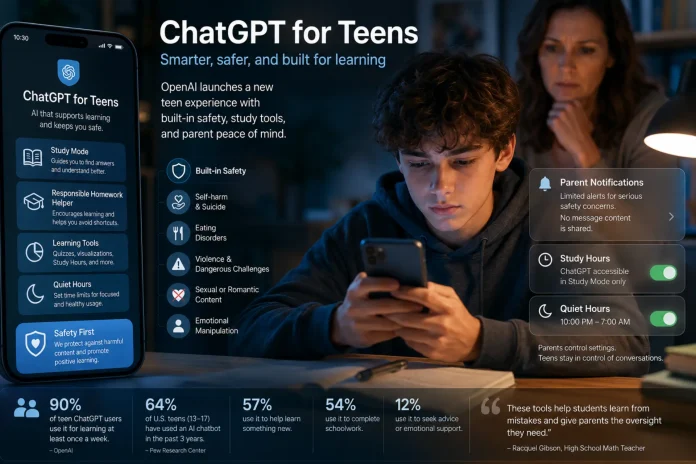
The company describes it as the same powerful ChatGPT with default safety and learning tools enhanced to create a better experience. Study mode supports teens’ question-asking and guides them to find an answer themselves instead of providing it directly. At the same time, responsible homework helpers notify students to prevent them from using the app inappropriately and force the Study mode. Other learning features include quizzes, visualization tools, and Study Hours that allow users or parents to make the chatbot accessible only in Study mode during specific times. Quiet hours allow users to set time limits within which the chatbot will have access to this feature.
Self-harm, suicide, eating disorders, violence, dangerous challenges, and sexual or romantic content are protected against on the new platform. The model should refrain from using romantic language and avoid emotional manipulation, claiming to have feelings or consciousness. Parents who link their accounts to their child’s account can receive limited notifications regarding their child’s dangerous activity on the platform. However, they cannot view the contents of their child’s messages.
OpenAI states that nearly all (90%) teen ChatGPT users turn to the platform for learning purposes at least once a week, with most interacting multiple times a week. According to a Pew Research Center survey of 1,536 American teens, 13–17 years old, 64% have used an AI chatbot at least once in three years. 57% of them have used it to help learn something, 54% of teens have used it to complete schoolwork, and 12% have used it to seek advice or emotional support.
Early checks already raise questions. A Business Insider reporter testing the teen experience found that persistent prompting could still produce a full essay and math solution. OpenAI noted the rollout was just beginning and pointed users toward Study Mode and parental Study Hours settings.
Age prediction relies on account signals topics discussed, usage times, account age and defaults to the safer teen experience when unsure. Adults wrongly sorted in can verify age through a third-party service. OpenAI acknowledges the system is imperfect.
The news comes at a sensitive time, as the parents of 16-year-old Adam Raine filed a wrongful-death lawsuit against the developers of ChatGPT in the wake of his suicide. This claim has since been dismissed in court, but similar concerns have been raised that the AI chatbot encourages unsafe behaviors and has easily bypassed content filters.
Miami high school math teacher Racquel Gibson thinks features like the responsible homework reminder encourage struggling students to learn from their mistakes, rather than just getting answers, while tools like the parent dashboard offer more oversight to families who may not have the resources to do so themselves. According to OpenAI’s head of youth and families, Lauren Jonas, these adjustments are the default for any under-18 user who has inputted those details.
The question for parents, teachers, and students is whether these updates to ChatGPT will ultimately make it a safer space for preteens and teenagers or just further enable their access to the service. The former seems unlikely to happen immediately, as determining the true effectiveness of these tools will require additional research into how many users actually utilize the new features and if they reduce overall engagement with the chatbot. Nevertheless, the updates have already begun.