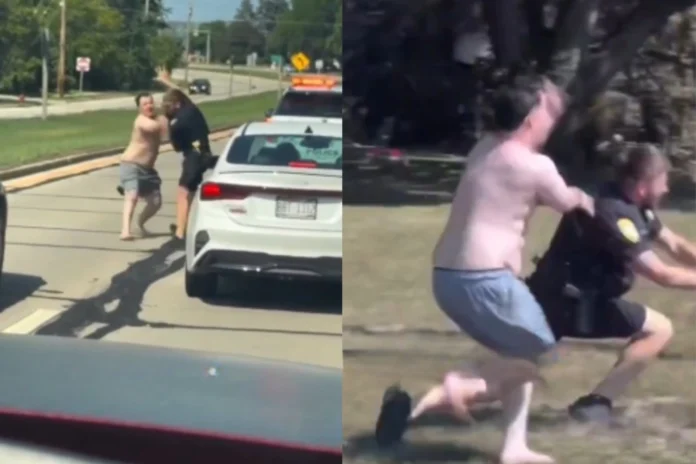
A familiar kind of video keeps popping up on social media: a white man punches, grapples with, or charges at a police officer, and the encounter ends with physical restraint, a Taser, or backup arriving—rather than gunfire. The clips travel fast, and the comments travel even faster. The recurring question is blunt: Would it have gone the same way if the suspect were Black?
These videos aren’t new, but they still hit a nerve. Viewers on one side treat them as clear proof of a double standard. On the other side, people point to the specifics of each situation—threat level, resistance, whether a weapon was involved, how many officers were present—and argue that race isn’t the deciding factor. The conversation is messy, emotional, and very online.
The numbers behind the outrage
Look at the broader data and the picture gets more complicated. The Washington Post’s Fatal Force database, which tracked fatal police shootings from 2015 through 2024, recorded more than 10,400 cases. Roughly 45 percent of the victims were white, about 24 percent were Black, and around 16–17 percent were Hispanic. On a per-capita basis, Black Americans were killed at roughly two to two-and-a-half times the rate of white Americans.
Most of those shootings involved armed suspects or situations where officers faced an immediate threat. Unarmed cases were the minority. Absolute numbers still show white victims making up the largest single group in many years.
Crime patterns matter here too. FBI data and victim surveys have long shown Black Americans accounting for a disproportionately high share of arrests and identified offenders for serious violent crimes—murder, robbery, and aggravated assault in particular. Higher involvement in the kinds of incidents that put people in high-risk contact with police creates more opportunities for force to be used. That doesn’t explain every individual case, but it shapes the overall numbers.
What the research has found
One of the more closely examined studies on this topic came from Harvard economist Roland Fryer in 2016. Looking at millions of police interactions and officer-involved shootings, he found clear disparities in non-lethal force—Black and Hispanic people were significantly more likely to be pushed, handcuffed, or otherwise physically controlled. Those gaps shrank with controls but didn’t vanish completely.
On lethal force, though, the study found no racial difference once context was accounted for. In some high-risk situations, Black suspects were actually less likely to be shot. Other research has produced mixed results—some simulations even suggest officers can be more hesitant when the suspect is Black. The takeaway many researchers land on is that deadly force decisions are more tightly constrained by the immediate threat than lower-level force is.
Why the videos keep landing the way they do
Individual clips are powerful because they’re visual and immediate. They’re also incomplete. A bystander phone video rarely shows what happened in the minutes before, whether the suspect was reaching for something, or how the officer was trained to respond under department policy. Social media rewards the version that confirms what people already believe.
That doesn’t mean every use of force is justified, or that disparities in policing deserve no scrutiny. Documented cases of excessive force exist, and non-lethal force gaps remain harder to explain away. At the same time, treating every non-shooting of a white assailant as automatic proof of privilege—and every shooting of a Black suspect as automatic proof of racism—flattens a complicated reality.
These videos keep resurfacing because they tap into deeper arguments about fairness, safety, crime, and trust in institutions. The online debate rarely resolves anything. It just resets the same questions with new footage.