

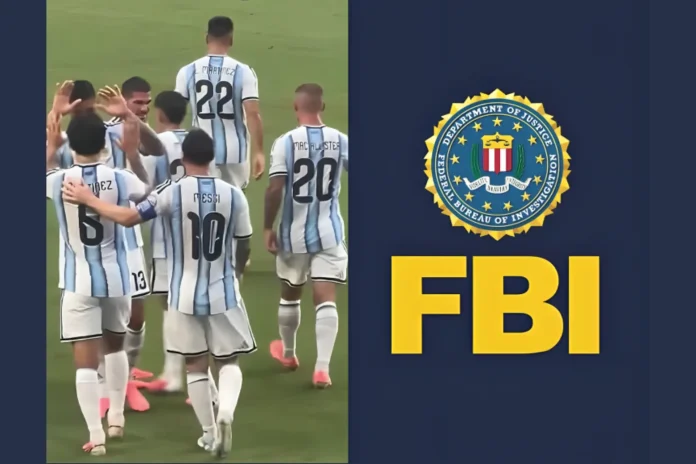
In the midst of Argentina’s thrilling run in the 2026 FIFA World Cup on U.S. soil, a shadow has fallen over the country’s football federation. American authorities have begun examining transactions totaling over $300 million, including sponsorship deals, media rights, and commercial revenues that were conducted via American banking institutions, posing possible instances of financial fraud and money laundering in the upper echelons of Argentine football.
The main target of a preliminary investigation conducted by the FBI and Department of Justice is the Argentine Football Association (AFA) under the presidency of Claudio “Chiqui” Tapia. The information is published in the report of La Nación newspaper and subsequently picked up by Miami Herald and Marca.
A key player in the scrutiny is TourProdEnter LLC, a South Florida-based company. Reporting indicates this entity handled roughly $260 million in AFA-related funds from international commercial deals. “Investigators are reviewing commercial deals and have taken witness statements,” sources told La Nación. Businessman Guillermo Tofoni was reportedly among those questioned.
The story matters far beyond the pitch. When large sums from global sports sponsorships flow through U.S. financial institutions, American authorities gain jurisdiction under money-laundering and bank-fraud statutes. “Substantial cross-border transfers and use of U.S.-registered companies can create jurisdictional hooks,” as outlined in coverage of the probe.
The probe reportedly gained momentum in 2025 after Argentine banking documents and alerts drew U.S. interest. By July 2026, as Argentina competed in the World Cup hosted in the United States, outlets like the Miami Herald reported active preliminary inquiries in Washington, D.C., and Miami. Witness testimony and document reviews are underway, but no U.S. criminal charges have been filed.
Tapia, president since 2017, oversaw Argentina’s golden era: victories in the 2021 Copa América, 2022 World Cup, and 2024 Copa América. Under his leadership, the AFA expanded commercially with partners like Adidas and Warner. Yet the federation now faces questions about how those revenues were handled.
This U.S. inquiry is separate from domestic Argentine cases. In March 2026, an Argentine judge charged Tapia and treasurer Pablo Toviggino with tax and social security contribution issues involving around 19 billion pesos. Assets were seized, but those matters involve different allegations and authorities.
The AFA has pushed back, maintaining that its financial operations are legitimate. No official U.S. charges exist, and the investigation remains in early stages. “The AFA has stated that its operations are legitimate,” Goal.com reported.
Online speculation exploded during the World Cup, with memes linking on-field drama to off-field rumors. Fans should separate verified reporting from viral claims. La Nación’s investigative work, corroborated by U.S. outlets, forms the basis of what’s known so far.
In case the investigation continues to expand, it may hurt the reputation of the AFA, impact its sponsor relations, and make FIFA take closer notice. However, right now it functions as a reminder that success on the field does not guarantee protection from financial liabilities.
The audience should get updates directly from the FBI, Department of Justice, Argentine authorities, or the AFA, and not from the unconfirmed information published on social media. This story is unfolding.
 is facing a massive investigation over allegations of fraud, money laundering, and financial misconduct totaling over $300 million.)