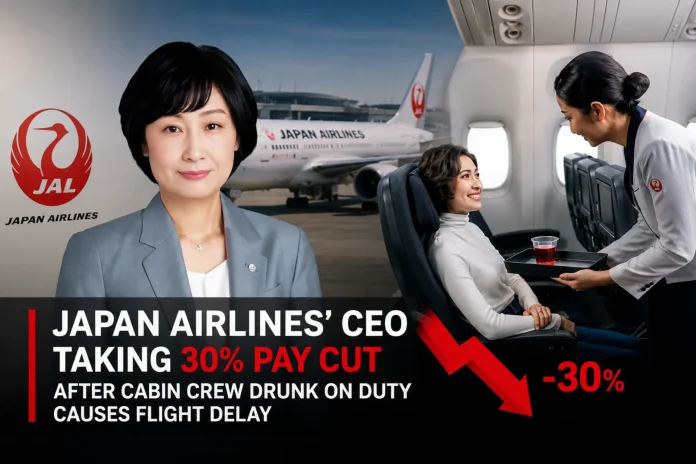
Japan Airlines President Mitsuko Tottori, the carrier’s first female chief executive and a former cabin crew member, is voluntarily taking a 30 percent pay cut for the next two months. The decision follows an incident where two cabin crew members drank alcohol the night before a flight, violating the airline’s strict rules and causing a 40-minute delay. Tottori did not shift blame or hide behind corporate language. She chose to take personal responsibility for what happened on her watch.
The incident took place on May 23 on Flight JL252 from Hiroshima to Tokyo Haneda. Two cabin attendants had been drinking at a hotel lounge during their layover. They consumed alcohol well past the 12-hour cutoff the airline requires before any flight duty. One of them, the chief cabin attendant, later failed a breathalyzer test at the airport.
The airline had to find a replacement crew member before the plane could depart. Passengers waited at the gate for 40 minutes while the situation was resolved.
What made the situation worse was the attempt to cover it up. One crew member falsely reported being too sick to work. Both later gave misleading statements during the internal investigation. Japan Airlines responded by firing the chief attendant and launching a broader review.
The company also announced a complete ban on drinking alcohol for all 6,000 of its flight attendants during work layovers. Japan’s transport ministry issued a formal reprimand and set a July deadline for stronger safety measures.
Tottori’s choice to cut her own pay sent a different message than most corporate responses. Instead of protecting herself, she accepted a direct financial consequence. This is the third time in the past year she has taken a similar 30 percent pay cut after alcohol-related incidents involving crew.
Other senior leaders at the airline are also facing reduced compensation. The safety manager and cabin services manager will see their pay reduced as well. Tottori began her career as a flight attendant, so she understands the pressure and responsibility that comes with working in the cabin.
Alcohol has no place in aviation work for a simple reason. Even small amounts slow reaction times and impair judgment at the exact moments when clear thinking matters most. A cabin crew member needs to stay alert for medical emergencies, sudden turbulence, security issues, or any situation that requires quick decisions.
When someone drinks before duty and then tries to hide it, the problem becomes bigger than the original mistake. The cloud of impaired thinking can turn one bad choice into a chain of poor decisions that put passengers at risk.
Tottori’s willingness to accept personal consequences has drawn attention because it is uncommon. Many leaders in large organizations prefer to issue statements about reviewing procedures while shielding themselves from direct accountability. By taking a financial hit for the third time, she is showing that responsibility starts at the top.
Her background as a former flight attendant makes the gesture feel more genuine rather than a calculated public relations move. She knows firsthand the demands of the job and the trust passengers place in crew members.
Passengers on that delayed flight from Hiroshima likely had no idea their wait was caused by something that could have been avoided with better judgment the night before. The crew members involved made a choice that affected hundreds of people.
Tottori’s response reminds everyone that in safety-critical work, rules exist to protect lives, not just to create paperwork. When leaders treat those rules with real seriousness, including when it costs them personally, it sends a powerful signal through the entire organization.
The airline has faced similar issues in the past, which is why the latest response includes both the pay cuts and the expanded ban on drinking during layovers. Tottori has been consistent in how she handles these situations. She does not treat them as isolated problems that only involve the people who made the mistake.
She treats them as failures that leadership must own. That kind of honesty is what separates real accountability from empty words.
In an industry where public trust depends on safety, actions like this matter more than polished statements. Tottori could have let the disciplinary actions stop at the cabin crew level. Instead she chose to share in the consequences.
Her decision reflects the kind of leadership that understands the weight of responsibility when people’s lives are in your hands every time a plane takes off.