

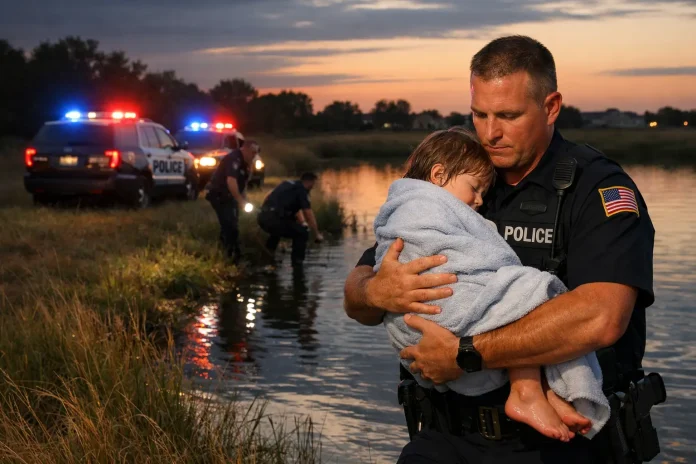
A Josephine police officer rushed into a dark pond and rescued a missing 3-year-old boy with autism who had wandered into the water, averting a potential drowning in a dramatic incident captured on body camera footage. The rescue occurred on December 20, 2025, after the boy’s parents realized he was missing from their home in the Magnolia Pointe neighborhood and immediately began searching before calling authorities around 8:30 p.m. Officers arrived to find the family already looking, but quickly shifted focus to a nearby pond based on specialized training that highlights how children with autism are frequently attracted to water.
Bodycam video shows the officer scanning the area with a flashlight, spotting movement in the pond, hearing the child’s cries, and wading in to pull the boy to safety while offering calm reassurance with words like “Come here, baby, you’re OK.” The effort involved coordinated response from multiple officers who prioritized the water source due to known risks associated with autism elopement, where wandering leads many children toward dangerous attractions like ponds or lakes. This targeted approach, informed by awareness of behavioral patterns, allowed for a swift recovery after the boy had been missing for roughly 30 minutes.
The child was found partially submerged but emerged unharmed with no injuries reported, received medical clearance, and was reunited with his family shortly after the rescue. As of December 26, 2025, the boy remains safe at home with no ongoing health concerns noted. The case is still open and undergoing routine review by Child Protective Services, a standard procedure in incidents involving young children, though no additional details on outcomes have been released.
This successful outcome underscores the critical role of first-responder training in handling autism-related emergencies, where quick action can prevent tragedy. Children with autism face a drowning risk 160 times higher than neurotypical peers, according to data from the National Autism Association, with elopement occurring in nearly half of cases and water often proving fatally attractive due to its sensory appeal. The Josephine officers’ preparedness turned what statistics suggest could have been fatal into a story of effective intervention and community relief.

