

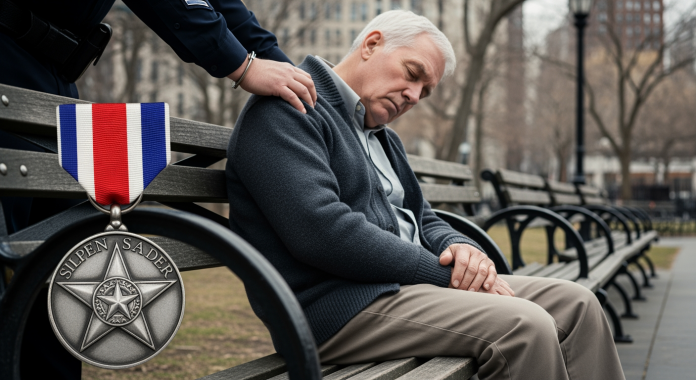
The arrest of Silver Star veteran Thomas “TJ” Jones for sleeping on a park bench in Anacostia Park, Washington D.C., has sparked a significant public backlash and an intense online debate. Images of the decorated serviceman being apprehended quickly spread, prompting widespread calls for accountability and compassion. This incident has swiftly become a stark symbol of the ongoing crisis of veteran homelessness and the often-harsh realities of urban public policy.
Within hours of the footage surfacing, social media platforms filled with expressions of outrage. Users shared the striking images, widely condemning the authorities’ actions. Many highlighted Jones’s profound military record, specifically his heroic valor recognized by the Silver Star, contrasting it sharply with his current circumstances. This immediate public reaction underscored a deep societal discomfort with the perceived neglect of those who have served their country.
The Silver Star, awarded for gallantry in action against an enemy of the United States, places Jones among a highly select group of military heroes. This distinction elevates the incident beyond a simple city ordinance violation, framing it as a profound failure of systemic support for veterans. His honor intensifies the public’s shock, questioning how a hero could find himself without safe shelter and then be criminalized for seeking a moment’s rest.
Community advocates are vocal about the broader implications this situation brings to light. Sarah Chen, Director of Veteran Support Initiatives at “Homes for Heroes D.C.,” states the incident reflects a pervasive systemic failure in how society treats its most vulnerable, especially veterans.
“When a veteran, especially one decorated for incredible bravery, is arrested for a basic human need like sleep, it forces us to confront uncomfortable truths about our priorities. This isn’t just about one man; it’s about the hundreds of thousands of veterans struggling nationwide who feel forgotten and unsupported.”
— Sarah Chen, Director of Veteran Support Initiatives, Homes for Heroes D.C.
The arrest has brought urban ordinances, often designed to regulate public spaces and maintain order, under intense scrutiny. Critics argue that such laws disproportionately impact vulnerable populations, including the homeless. They contend these policies effectively criminalize poverty and a lack of resources.
Advocates argue that cities like D.C. must prioritize long-term, rehabilitative solutions for homelessness over punitive measures. Such punitive actions, they say, merely exacerbate existing societal problems for individuals like TJ Jones.
Meanwhile, the incident has fueled a larger discussion about the true cost of war and the enduring societal responsibility to care for returning service members. Online discussions often highlight the effectiveness of current veteran support programs and the allocation of critical city resources.
Many participants wonder if current policies are truly designed to uplift and integrate these individuals, or if they merely manage visible social issues without addressing their root causes.
A local resident, Marcus Thorne, who frequently volunteers at a nearby homeless shelter, shared his perspective on the complex challenges faced by veterans in the city. He emphasized the need for empathy.
“It’s heartbreaking to see someone who fought for our freedoms end up on a park bench, then get arrested for it. We need more than just temporary shelters; we need comprehensive support, mental health services, and genuine opportunities for these heroes to reintegrate. This is a moment for serious self-reflection.”
— Marcus Thorne, Local Volunteer and Resident
As the story continues to generate public outcry, the arrest of Thomas “TJ” Jones serves as a potent reminder that the battles many veterans fight often extend far beyond the battlefield. It challenges communities nationwide to re-evaluate their approaches to homelessness, public safety, and the moral obligation to those who sacrificed for the nation’s security, demanding urgent attention to a crisis often hidden in plain sight and impacting deserving citizens.

