

In mid-November 2025, Colombia revealed the first objects ever lifted from the legendary San José galleon a bronze cannon engraved with the year 1655 and dolphin-shaped handles, three hammered gold 2-escudo coins minted in Lima and Bogotá, and a remarkably intact Chinese porcelain cup from the Qing dynasty’s Kangxi period (1662–1722). The items, along with ceramic shards, glass bottles and iron fittings, were retrieved between November 16 and 18 using deep-sea remotely operated vehicles (ROVs) underwater robots equipped with manipulator arms and high-definition cameras.
A tweet from X.
The announcement came from the Colombian Ministry of Culture and the Colombian Institute of Anthropology and History (ICANH) as part of the ongoing
“Hacia el Corazón del Galeón San José”
Research project. Officials stress that the operation is strictly archaeological, not a commercial salvage.
News of the recovery spread rapidly on social media after a Dexerto post declared,
“The first treasure has been recovered from a 300-year-old shipwreck believed to contain goods worth an estimated $20b in today’s money.”
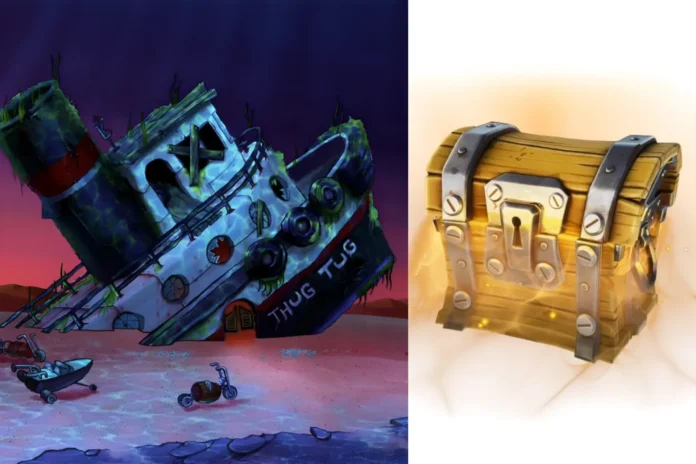
The post quickly gained more than 48,000 views and 1,800 likes helped along by two eye-catching but entirely illustrative images a sunset scene of the Flying Dutchman shipwreck from SpongeBob SquarePants and a glowing Fortnite treasure chest. Those pictures were not actual photos of the San José site real images released by Colombian authorities show only the authenticated cannon, coins and porcelain.
The bronze 6-pounder cannon, cast in 1655, still bears its distinctive dolphin handles a detail that matches earlier 2015 imagery of the wreck and confirms the site’s identity. The three gold “cob” coins (rough, hand-hammered pieces typical of the era) and the delicate porcelain cup were lifted inside pressurized cages to protect them from sudden changes in water pressure. All nine recovered items are now undergoing desalination and stabilization in a high-tech laboratory at the former ARC Bolívar naval base in Cartagena.
Built in 1698 in the Basque region of Spain, the 62-gun, three-masted galleon served as flagship of the Spanish treasure fleet. On June 8, 1708, while carrying wealth from Potosí, Cartagena and Portobelo to fund King Philip V’s war effort during the War of the Spanish Succession, it was ambushed by a British squadron led by Commodore Charles Wager off the Barú Peninsula near Cartagena. A British cannonball struck the powder magazine the resulting explosion sank the ship in minutes. Only about a dozen of the roughly 600 people aboard survived.
Historical manifests and comparisons with sister ships suggest the San José went down with an estimated 7–11 million silver “pieces of eight,” hundreds of chests of gold escudos and more than 100 chests of Colombian emeralds. Modern estimates of the cargo’s value based on bullion prices and numismatic worth range from $17 billion to more than $20 billion, though no complete inventory has ever been made.
The wreck was located on November 27, 2015, by the Colombian Navy working with Woods Hole Oceanographic Institution and the Maritime Archaeology Sea Trust. Colombia immediately classified the exact coordinates as a state secret to prevent looting.
The Competing Claims
Ownership remains fiercely contested:
- Colombia asserts full rights, declaring the wreck national underwater cultural heritage lying within its contiguous zone.
- Spain argues the San José was a sovereign warship and that cannons and other state property should be repatriated.
- Sea Search Armada, a U.S.-based salvage company, insists it located the wreck in 1982 and is seeking half the value through lawsuits pending in London and U.S. courts.
- Indigenous communities in Colombia and Bolivia have raised moral claims to emeralds mined with forced labor.
- UNESCO urges in-situ preservation and discourages commercial exploitation while mediating talks.
Colombian officials say further recoveries planned for 2026–2027 will target additional cannons, personal belongings and, eventually, selected coin or ingot piles always with archaeological documentation first. Scientists hope the artifacts will shed new light on 18th-century metallurgy, trade routes and the precise mechanics of the fatal explosion.
For now, the bronze cannon, three coins and porcelain cup sit in Cartagena’s conservation lab quiet testament to a 317-year-old tragedy that still captivates the world and keeps courts busy on three continents.
