

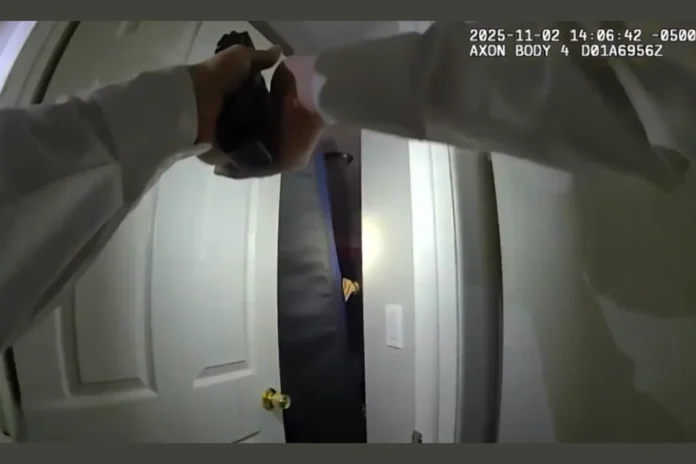
Things turned terrifying in Brandon, Florida, on November 2, 2025, when Hillsborough County Deputy Antonio Gonzalez fired on and killed 27-year-old Mario Camacho in response to a domestic violence call. According to records from the Hillsborough County Sheriff’s Office and local news accounts, Camacho had barricaded himself into a bedroom, wearing a motorcycle helmet and two tactical vests, holding his 7-year-old brother in a chokehold with a knife to his throat. He refused to release his grip after deputies had pleaded with him to drop the weapon.
A tweet from X.
It began at about 2 p.m. when Camacho’s sister called 911 from their residence on the 100 block of Alpine Drive, reporting that he was armed and hurting people. Deputies arrived in relatively quick time and could hear the kid screaming for help right away. Camacho’s getup made it clear he was ready for a fight, which only served to ramp up the danger and leave the officers with no choice but to move in quick to save the boy.
The bodycam video from Deputy Gonzalez shows the chaos unfolding in that bedroom. You can hear him yelling, “Drop the knife!” over and over, trying to stay calm but clearly desperate. Camacho ignored it all, keeping his grip on the child, at which point Gonzalez fired one shot to the head. Under Florida law, that is allowed when someone’s life is in immediate danger like that.
Camacho was taken to Brandon Regional Hospital but was pronounced dead by 2:47 p.m. The little boy got out okay physically, but man, the emotional damage from something like that has to be huge. The Florida Department of Law Enforcement (FDLE) is investigating, which is routine for these officer-involved shootings, and Gonzalez a 25-year-old with almost six years on the job is on paid administrative leave while that’s going on.
Word spread quick on social media. Collin Rugg posted about it on X, racking up over 207,000 views, calling Gonzalez a hero for taking out Camacho who was wearing that helmet and refusing to release the kid. Only, of course, WFLA and Bay News 9 jumped at the story in a bid to validate the HCSO’s account and even aired portions of the bodycam. Online, many were applauding the police for stepping up to what is a seriously messed-up situation.
This is not an isolated incident it’s part of a greater problem throughout the country. Places like Mapping Police Violence count more than 1,200 deadly police shootings per year in the U.S. as of last year, and it always follows arguments about how such an incident could have been dealt with differently by police or if de-escalation training needs to be increased. Bodycams, such as the one used in this case, help with transparency; however, they do not fix everything.
But at the end of the day, it’s the people who suffer. That poor kid, seeing his brother turn violent like that, is likely at very high risk for PTSD, per studies from the National Institutes of Health. The HCSO said they got him trauma support, and places like the Crisis Center of Tampa Bay are there for folks in the area; just call 211.
In the words of Chief Deputy Joseph Maurer:
“The deputy’s quick thinking saved that child’s life, but it’s a tragedy for the whole family.”
Stories like this remind us how tough it is to balance saving lives in the moment with dealing with the aftermath, and why we need solid investigations and honest reporting to keep things in check.
