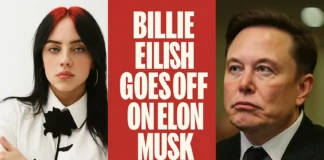
In a glittering hall packed with entertainment icons and tech titans, Billie Eilish turned her acceptance speech into a quiet call for radical generosity, leaving the crowd—and one billionaire in particular—visibly unsettled.
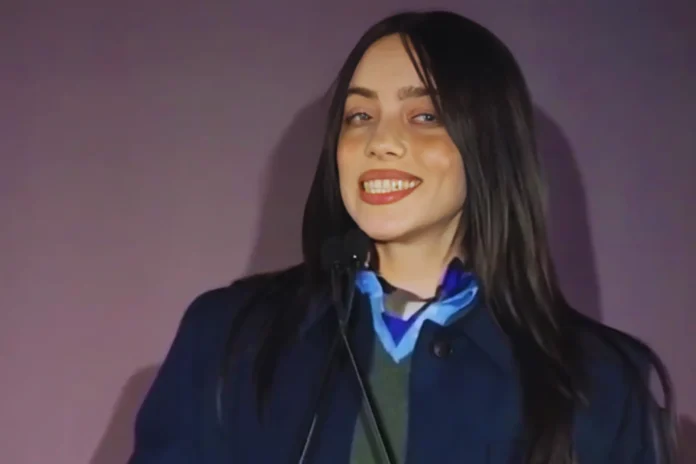
The 23-year-old singer stood on stage at the WSJ Magazine 2025 Innovator Awards in New York City on October 29, clutching her Music Innovator Award plaque. She wore a sleek navy coat layered over a green top, with a blue-collared shirt peeking out, and her long, dark hair cascading around her face. Behind her, a moody purple backdrop glowed with WSJ logos, setting the tone for an evening of high-profile honors.
Eilish earned the award for her groundbreaking work on the album Hit Me Hard and Soft and its accompanying world tour, which raked in $182 million at the box office. Yet amid the applause, she shifted gears with her signature deadpan delivery in a clip that lasted just 20 seconds.
“I love you all,” she began, flashing a quick grin at the audience.
Then her tone sharpened, eyes narrowing with playful intensity.
“But there’s a few people in here that have a lot more money than me. If you’re a billionaire, why are you a billionaire? No hate, but yeah, give your money away, shorties.”
The word “shorties” hung in the air like a mic drop, drawing a wave of awkward laughter, cheers, and scattered chuckles from the room. She wrapped up with a breezy
“Love you guys, thank you so much,”
blow, a kiss before stepping back into the spotlight’s glow.
Reports place Meta CEO Mark Zuckerberg squarely in the audience that night, with his net worth topping $100 billion, making him one of the world’s wealthiest individuals. He reportedly sat stone-faced, offering no applause as Eilish’s words landed. With such a prominent figure present, questions swirl about intent: did she craft those lines knowing he—and others like him—would hear them up close? The directness feels deliberate, a Gen Z gut punch aimed at bridging the chasm between stage lights and boardroom vaults.
The event drew a powerhouse crowd, including honorees such as Hailey Bieber for Beauty, Dr. Priscilla Chan for Philanthropy in Science, Ben Stiller, Spike Lee, and model Karlie Kloss. Stars such as Lila Moss, Brittany Snow, and actors Adam Scott and Britt Lower from Severance mingled on the red carpet, while Ella Emhoff arrived arm in arm with boyfriend Charlie Vessell. Host Stephen Colbert kept the energy high, later revealing Eilish’s own commitment to change.
Colbert announced that Eilish had donated $11.5 million from her tour proceeds to causes tackling food equity, climate justice, and carbon pollution reduction. These funds support programs like The Changemaker Program, channeling resources into broader efforts against the climate crisis. On behalf of “humans everywhere,” Colbert thanked her, underscoring the real-world ripple of her platform.
Eilish, whose personal fortune exceeds $50 million, has long incorporated activism into her art, from promoting sustainable fashion to making environmental pleas. This speech marks a bolder stroke, blending cheeky roast with heartfelt urging to deploy wealth for the greater good. It echoes her past calls to help those in need, now amplified in a space where power brokers hold sway.
The moment exploded online almost instantly, with clips racing across platforms and sparking heated debates. Fans hailed it as peak Billie: raw authenticity wrapped in low-key revolution. Critics, however, pointed to irony—a multimillionaire prodding billionaires while safeguarding her own gains. Voices online declared that no billionaire is truly ethical, or dismissed the donation as a drop in the ocean compared to her tour’s haul. Memes flew, cheers clashed with skepticism, even drawing nods to peers like Taylor Swift in the wealth redistribution debate.
Yet as clips rack up millions of views, the exchange spotlights a deeper tension in our Gilded Age. In industries where creativity fuels fortunes, how much accountability do the ultra-rich owe the rest? Eilish’s quip, intentional or not, ignites that dialogue without apology. It challenges not just wallets, but wills—urging a shift from accumulation to action. For a generation watching wealth gaps widen, her words land as both shade and spark, reminding us that true innovation might start with opening the vault.
For more information on Eilish’s tour and its impact, visit her official website here. Details on the WSJ Innovator Awards can be found at this link. Explore climate justice initiatives supported by such donations via this resource. And for insights into philanthropy in entertainment, see this overview.