

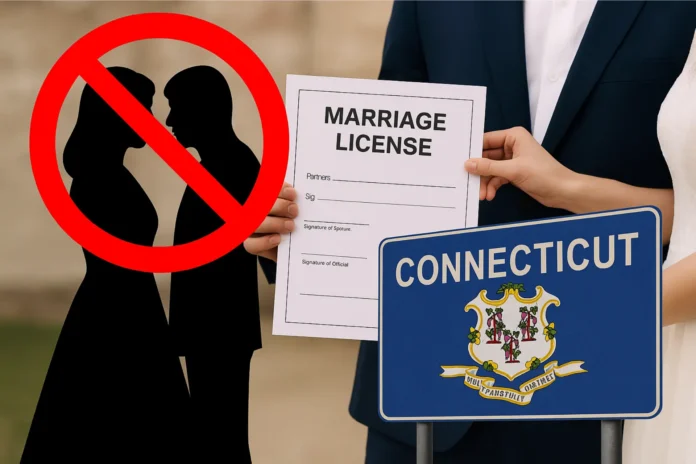
Connecticut couples eyeing a courthouse wedding with a close relative just hit a new legal wall that’s reshaping family traditions overnight.
The ban kicked in yesterday, October 1, under House Bill 6918, a straightforward measure that zipped through the state House and Senate with votes from Democrats and Republicans alike. Governor Ned Lamont inked his approval in the spring, folding in a clear directive: no marriage licenses for first cousins, period. Existing unions stay intact, and there’s no crackdown on dating, living together, or raising kids. Clerks say no to the paperwork, keeping things civil without jail time or annulments.
Now Connecticut joins 25 other states in drawing that line, leaving just 16 holdouts where first-cousin marriages sail through unchecked: Alabama, Alaska, California, Colorado, Florida, Georgia, Hawaii, Maryland, Massachusetts, New Jersey, New Mexico, New York, Rhode Island, South Carolina, Vermont, and Virginia. Eight more permit them with hurdles like counseling sessions or age cutoffs, but the rest treat the idea as a non-starter, sometimes with felony charges attached.
Cold, hard science on family health was at the heart of the push. First cousins carry about 12.5 percent shared DNA, which doubles the chance of recessive disorders in kids, jumping from the typical 3 to 4 percent risk to 4 to 7 percent. That can mean everything from birth defects to speech delays, developmental snags, and a life span trimmed by more than three years on average. Stephen Mendelsohn, who spoke up during public hearings, drove the point home with fresh data:
“In a February 2025 BBC story, it was reported that negative health outcomes go far beyond the more obvious issue of recessive genetic disorders; these negative health outcomes include developmental, speech, and language difficulties as well as overall increased healthcare needs even if there is no diagnosed genetic disorder.”
He wrapped it up bluntly:
“Turning what should be a blood relationship into a sexual relationship is not a good thing on multiple levels, even when consensual.”
The conversation didn’t stop at labs and stats. Voices in the hearings painted a raw picture of family fractures. Donna Farland, testifying for the ban, didn’t hold back:
“She often finds people who support first cousin marriages are pedophiles and does not believe there is any reason to marry a first cousin. She believes that women are sold into marriages under the guise of first cousin marriages and asked the committee to pass the bill to stop pedophiles and traffickers.”
Her words echoed a wider worry about coercion hiding behind blood ties, a thread that wove through calls to shield vulnerable folks from exploitation.
Yet the rooms buzzed with pushback too, stories that tugged at the gut. Alex Davis laid it bare from personal turf:
“First cousin marriage deserves more understanding and acceptance than it gets today.”
He shared how his parents, first cousins themselves, marked 30 years together with three thriving kids, calling the health fears “overstated” and the stigma a needless drag on real lives. Patricia Buyce leaned into scripture on the faith front:
“Marriage is a sacred gift from God, uniting two people in love and commitment.”
She pointed to Isaac and Rebekah as proof the Bible greenlights such bonds, insisting they square with natural law as long as no one gets hurt.
Bob Dobson chimed in from a Mormon lens, arguing the state’s move stomps on religious freedoms rooted in early church teachings that never flagged cousin unions as taboo.
This isn’t some isolated flare-up. The U.S. started clamping down on cousin marriages in the 1800s, with a big surge in the early 1900s tied to fears over inherited ills, long before DNA tests sharpened the view. Tennessee’s fresh ban last year set the tone, and Connecticut’s unanimous nod shows how these debates can bridge party lines when the stakes feel personal. Still, the numbers stay tiny, under 0.2 percent of all U.S. weddings, so that the ripple might stay subtle for most.
