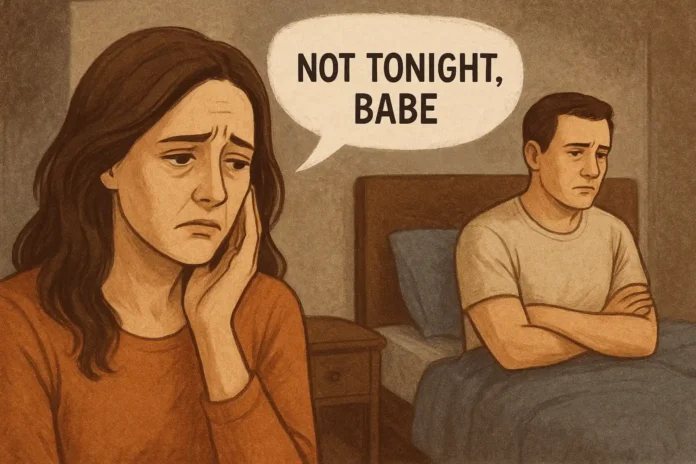
When a woman hears “not tonight, babe” night after night, it’s not just a fleeting rejection—it’s a slow, painful unraveling of the emotional and physical bond that defines a marriage. A viral video shared by a woman on social media has ignited a raw and urgent conversation about the state of sexual intimacy in long-term relationships. Her words cut deep: repeated rejection over years doesn’t just hurt—it erodes confidence, connection, and even mental health, turning spouses into platonic roommates.
This editorial explores the marital intimacy crisis, drawing on personal stories and expert insights to highlight why intimacy fades, the role of menopause, and actionable steps couples can take to reclaim their spark. At its core, this is a call to prioritize open communication and mutual effort before love turns to resentment. The woman’s video lays bare a truth many couples face but rarely discuss: sexual rejection is more than a moment—it’s a wound that festers. She notes that constant dismissal can dismantle self-worth for men, leaving them questioning their value as partners.
For women, the absence of intimacy often feels like a loss of identity, reducing them to caregivers or co-parents rather than desired lovers. This dynamic creates a vicious cycle: emotional distance fuels less physical connection, which deepens the rift. As the woman poignantly states,
“Marriage without affection isn’t marriage—it’s survival.”
Her words resonate with research showing that a lack of intimacy is a leading predictor of marital dissatisfaction and divorce. Personal stories shared in response to the video bring this marital intimacy crisis into focus.
A user, skillsintimex, recounted how his wife’s menopause led to years of avoided intimacy, marked by physical pain and a complete loss of desire. At one point, she suggested he seek fulfillment elsewhere—a suggestion he rejected. Instead, she pursued hormone replacement therapy (HRT) with testosterone and progesterone, paired with Addyi, a medication for low sexual desire.
The transformation was striking: she went from avoiding intimacy to initiating it eagerly, rekindling a honeymoon-like passion. This story underscores menopause as a key factor in sexless marriages. Declining estrogen and testosterone can cause vaginal dryness, discomfort, and low libido, affecting nearly 50% of postmenopausal women.
Another user, tomgoeswest1, offered candid advice: wives should make spontaneous efforts to reconnect physically, while husbands must respect when their partner isn’t in the mood. He warned that neglect breeds resentment, which can spiral into disdain—a point where marriage repair becomes nearly impossible. His perspective highlights a critical truth: intimacy requires mutual effort and empathy. Both partners must actively nurture their connection through small gestures or honest conversations.
Experts emphasize that communication is the cornerstone of addressing intimacy issues. Couples often shy away from discussing sex due to fear of judgment or conflict, but silence only widens the gap. Couples therapy or sex therapy can provide a safe space to explore underlying issues, from unresolved conflicts to psychosexual barriers. For women navigating menopause, physical symptoms like painful intercourse or fatigue can deter intimacy.
HRT can alleviate these for many, but it’s not without risks and requires a doctor’s guidance. Addyi, while promising for some, has modest effects—clinical trials show an increase of just 0.5–1 satisfying sexual events per month—and potential side effects like dizziness. Non-medical solutions, like lubricants or rebuilding emotional closeness through non-sexual affection, can also make a difference.
The broader context is sobering. Stressors like work, parenting, or health issues, combined with poor communication, often exacerbate intimacy’s decline, feeding into the broader marital intimacy crisis. Cultural taboos around discussing sex, especially for women, add another layer of complexity. Yet, stories like skillsintimex’s offer hope: couples who tackle these challenges together—through medical intervention, therapy, or intentional efforts—can rediscover passion.
The woman’s viral message is a wake-up call: neglecting intimacy risks turning love into resentment. Marriage thrives on connection, not just coexistence.
As a society, we must destigmatize conversations about sex in marriage and encourage couples to seek help, whether through a therapist’s office or a doctor’s consultation. We urge couples to act before the gap widens—talk openly, listen with empathy, and explore solutions together. Resources like The Gottman Institute offer practical steps to rebuild intimacy for those struggling. Let’s prioritize the emotional and physical bonds that make marriage more than survival—a thriving partnership.