

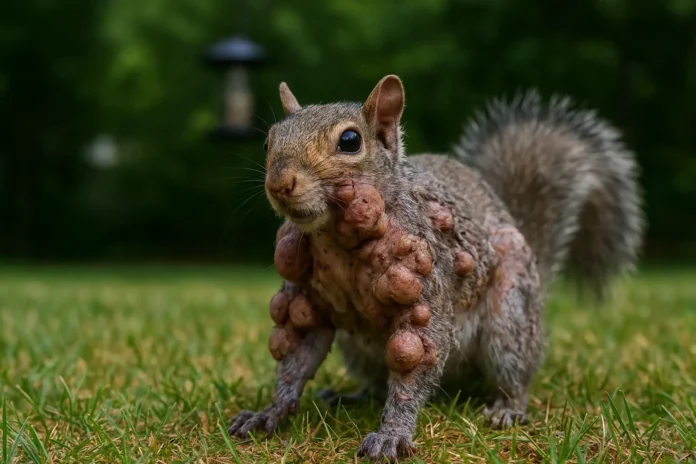
A string of startling backyard photos this summer has put so-called “zombie-like squirrels” at the centre of a viral panic. People posting images of gray squirrels with large, pus-filled, wartlike tumors and bald patches described animals that look “oozing” and “grisly” enough to set social feeds buzzing and headlines running. But wildlife experts say the pictures show a known, mostly benign wildlife disease, not a new threat to people.
“Zombie squirrels” is an online nickname for wild squirrels showing wart-like skin growths, hair loss and occasionally oozing sores. Sporadic reporting occurred since 2023 but spiked during summer 2025 following dramatic social shares on X and Reddit. The photos are centered in regions of the east coast and midwest U.S., with groupings seen in states like Maine and New York.
“The ‘zombie squirrels’ aren’t a new, human threatening phenomenon. They’re unlucky squirrels with an old, mostly self resolving poxvirus.”
This line sums up the facts wildlife agencies have been stressing since the posts started circulating.
A tweet from X.
Veterinarians identify the condition as squirrel fibromatosis (often called squirrel pox or fibroma), caused by a leporipoxvirus that produces skin tumours called fibromas. Biting insects and close contact for example at crowded bird feeders help spread the virus between squirrels. The lesions can look dramatic, ranging roughly from 1–10 cm, but are generally confined to the skin. Most affected animals recover as the growths resolve.
State agencies note the disease is distinct from the more dangerous squirrelpox (a different parapoxvirus) that has devastated red squirrels in the U.K.; in North America, fibromatosis mainly affects gray and fox squirrels and is usually less lethal. Historical records show similar cases as far back as 1953.
The recent rabbit stories in Colorado caused by a different, rabbit-specific Shope papillomavirus added to confusion and sensational headlines, but experts remind readers the two events involve separate viruses and species.
“Officials advise not to handle or capture infected squirrels to avoid cross-species contamination and to limit the spread among the squirrel population.”
Do not touch sick or dead wildlife. Temporarily removing bird feeders can reduce congregation and transmission. If you see clusters of visibly ill squirrels, report them to your state wildlife agency or a local rehabilitation centre. Most animals recover in weeks, though severe cases that impair feeding or vision sometimes require intervention.

