

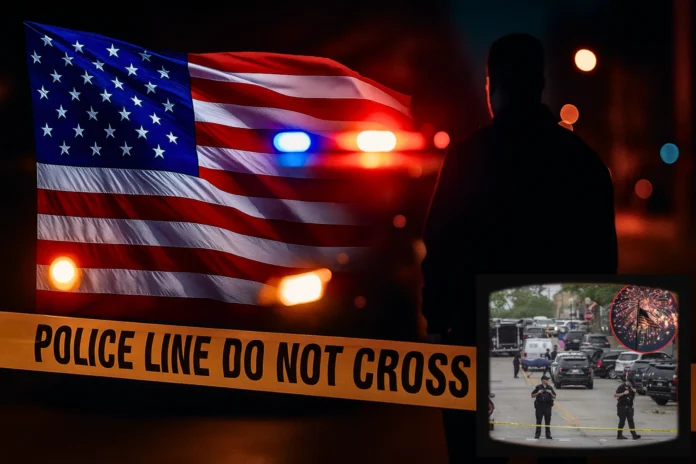
The Fourth of July, a day meant for celebration, turned deadly in Chicago as gun violence swept through the city, leaving 55 people shot and 8 dead over the holiday weekend. From July 3 to July 6, 2025, the city saw a wave of shootings that outpaced other major urban centers, cementing its grim title as the deadliest city for Independence Day. The numbers paint a stark picture of a holiday marred by chaos, with families and communities left reeling from the loss.
Among the most horrific incidents was a drive-by shooting on July 2 in Chicago’s River North neighborhood at Artis Restaurant and Lounge. During an album release party for rapper Mello Buckzz, a black vehicle pulled up around 11 p.m., and at least one gunman opened fire on the crowd. Four people—Taylor Walker (26), Leon Andrew Henry (25), Devonte Terrell Williamson (23), and Aviance King (27)—lost their lives. Fourteen others, aged 21 to 32, were injured, with four in critical condition. The attack, which left behind handgun and rifle casings, shook the city just as the holiday began. No arrests have been made, leaving questions about justice unanswered.
Chicago’s toll stands in sharp contrast to other cities. Philadelphia reported 41 people shot and 6 killed over a similar period, while New York City marked a historic milestone with zero shootings or murders on July 4, thanks to strong police efforts. Los Angeles had a mass shooting with four injured but no fatalities, and Detroit reported no major incidents tied to the holiday. Chicago’s 55 shootings nearly doubled Philadelphia’s, highlighting the city’s unique struggle with gun violence.
Last year, Chicago also held the grim record, with 109 people shot and 19 killed over the 2024 Fourth of July weekend—numbers that represented a staggering increase at the time. The pattern of violence points to deeper issues. Experts suggest large gatherings, alcohol, and hot weather fuel tensions during the holiday, creating a perfect storm for conflict. The Fourth of July often sees more mass shootings than any other day, with celebrations spilling into late-night chaos.
Other incidents over the 2025 weekend added to the toll. On July 3, a 25-year-old man was fatally shot in the head in the 100 block of West 111th Street. The next day, a 16-year-old boy was wounded in the leg in the same area. These smaller-scale shootings, while less publicized, reflect the widespread nature of the violence that gripped Chicago.
City leaders, including Mayor Brandon Johnson and Police Superintendent Larry Snelling, have called for community help to curb the violence, but solutions remain elusive. The July 2 shooting was not the first at Artis Lounge, which saw a similar attack in 2022, raising concerns about recurring trouble spots. This crisis extends beyond the city; nationally, more than 205 mass shootings had been recorded by July 5, 2025, framing Chicago’s pain as part of a larger public safety emergency.

