

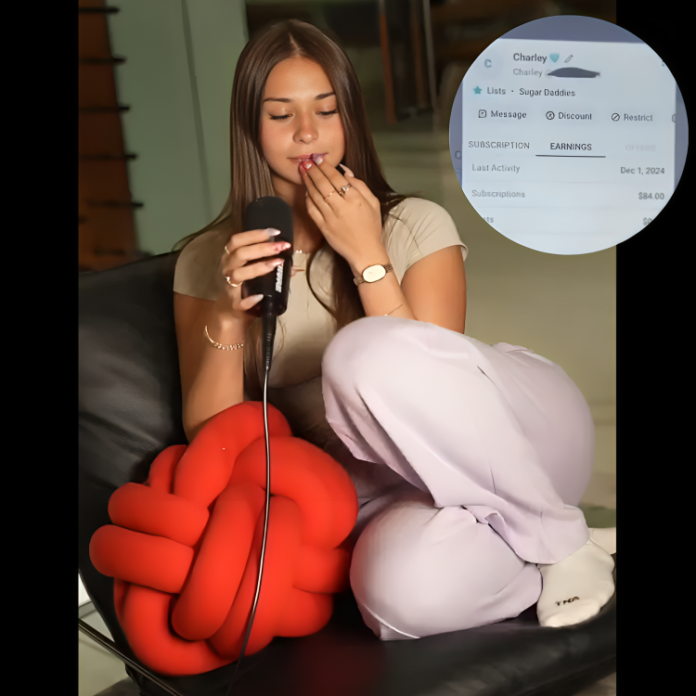
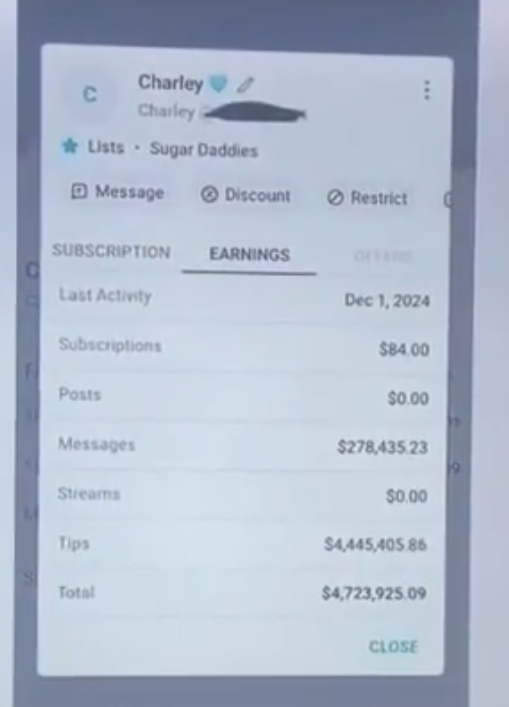
OnlyFans superstar Sophie Rain, 24, who raked in an astonishing $43 million in just one year, says she has never spoken once to her top spender. Charley, a shadowy figure who has bestowed an astonishing $4.7 million upon her, has never met Sophie, had a conversation with her, and remains her most devoted supporter. This surreal dynamic captures the essence of the OnlyFans phenomenon: a blend of intimacy and distance, connection and mystique.
With earnings that catapult her into the stratospheric top 0.00000001% of OnlyFans creators, Sophie’s rapid rise is a testament to the platform’s transformative power. Her claim of $43 million in annual income doesn’t just shatter preconceived notions about digital fame; she redefines what financial success looks like in the creator economy. Sophie attributes her success to a unique blend of allure, entrepreneurial savvy, and consistent engagement with fans. But among her millions of supporters, one stands out.
Charley’s devotion to Sophie is irrational. Of the $4.7 million he has spent, only $84 went to subscribing to her actual content. The rest? Tips-generous, steady, and relentless. But despite this financial outpouring, Charley has never sought a personal connection. Sophie herself remains in the dark about her most prominent fan’s identity, describing the relationship as
“purely transactional but deeply appreciated.”.
An emotionally charged video posted on social media saw Sophie thank Charley, referring to his support as “life-changing,” thanking God that he had been there through all those early days. This post put humans into what had otherwise been a rather enigmatic relationship, sparking a furor online.
The internet, as expected, had a lot to say. Sophie’s revelations started debates on the blurred lines between personal connection and monetization on platforms like OnlyFans. Supporters hailed her as a trailblazer- an empowered woman redefining the terms of financial independence. Critics, however, questioned the ethics of such arrangements, arguing that they reflect troubling dynamics in the digital economy.
Memes, think pieces, and spirited threads have overrun Twitter and Reddit, with every detail regarding Sophie’s success, from the astronomical earnings to Charley’s motives, getting scrutinized. To most, Sophie represents a high point of the OnlyFans phenomenon, where creators forge deep, emotional connections with fans while maintaining professional parameters.
A post from X.
But Sophie’s story has brought debates about transactional relationships to the forefront. Critics claim OnlyFans facilitates a worrying commodification of intimacy; fans say it allows women to reclaim their imagery and earnings. Sophie describes herself as a committed Christian and a virgin. Her content, she says, is solo performances only, and some challenge stereotypes about the site and its creators.
The case of Sophie is indicative of the larger trend. OnlyFans has become a lucrative alternative to traditional careers, with everyone from PhD students to single parents turning onto the platform for financial freedom. It has upended cultural conceptions about labor, gender roles, and fame. To many creators, OnlyFans is not just a career but also a cultural movement that radically reimagines how talent, beauty, and effort can be monetized in the digital age.
Beyond the numbers and the controversy, Sophie Rain is interesting herself. A content creator in her own right-balancing the faith life and the more provocative side-she epitomizes the modernist nature of content creators today.
“I’m not what people expect,”
says Sophie quite often, but her story tells just that. She had managed to create an empire of more than looks and created an aura of belonging with people, but she never crossed some boundaries.
As the OnlyFans ecosystem swells, the success story of Sophie Rain forces a related question: What does it portend about the future of online celebrity? In a place where that sense of personal contact can be and feel like both reality and fake, this dynamic between the two females captures the paradox of the creator economy, in which the way fans share intimacy with – not proximity to – creators has come to mean loyalty without the personal interactivity of in-person celebrities.
A post from X.
And that’s what makes Sophie’s story of instant celebrity so profoundly challenging: forcing us to reassess not only the nature of fame but also the nature of connection and the costs we pay for it.

