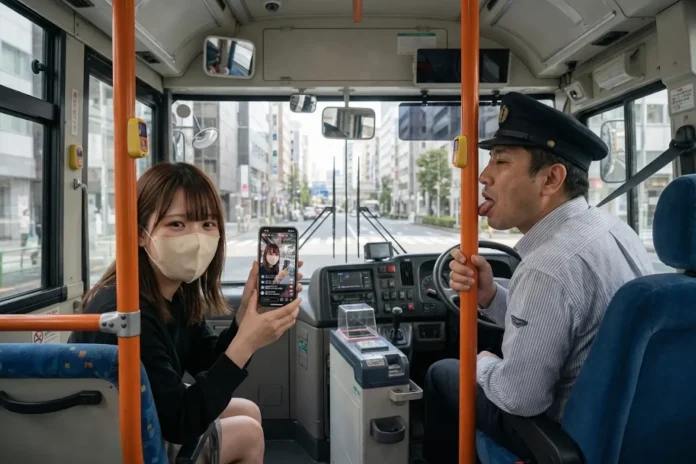
The primary record is unusually complete for a story this strange. Keikyu Bus published its own apology, which can be read in full on the company’s official website, and the Japanese and English coverage, including SoraNews24, agrees on the sequence: the stream on November 16, the driver reporting himself the same day, the official apology on November 18, and the bus identified, disinfected and its driver off driving duties by November 20.
A Japanese bus driver has lost his place behind the wheel after doing, on a livestream, exactly what a streamer told him to do: licking the hand straps and handrails inside his own bus.
The driver works for Keikyu Bus, which runs services across Tokyo and Kanagawa, including routes to Haneda Airport. The incident happened on November 16, after the bus had finished service for the day, according to Dexerto. On a split-screen livestream, a female streamer directed him around the empty bus in real time. “I want you to lick the part you hold onto, a bit further up,” she told him, according to Japanese outlet coki. He complied, licking the hanging straps and rails passengers grip every day.
The streamer has been identified on social media as Riakyun, who reportedly broadcasts on the Japanese livestreaming app Fuwatch. Keikyu Bus did not name her in its statements. The driver, apparently realizing how the footage would play once it spread, reported himself to the company the same day.
The company’s response came in stages. On November 18, Keikyu Bus posted an official apology on its website. “We sincerely apologize for the great discomfort and concern this has caused,” the company said, pledging to thoroughly educate all employees to prevent a repeat. Two days later, it announced that the bus in question had been identified and thoroughly disinfected, and that the driver had been relieved of his driving duties, with disciplinary action to follow under internal rules, as Japan Today reported.
The story has become a small case study in how livestream culture can reach into the most regulated corners of working life. Japan’s transit workers operate under intense public scrutiny, and the country’s buses and trains are usually in the news for the opposite kind of story, like the Japanese women who intervened to stop a man filming girls on a subway. This time, the discomfort was the point of the broadcast, and it cost the man taking the orders his duties, while the streamer giving them faces no known consequence at all.
Japan produces a steady supply of these only-in-Japan viral stories, from transit heroics to cases like the Japanese man arrested after scoring $25,000 in free meals through a delivery app scam. The bus case stands out because the misconduct was never hidden. It was performed, live, at a stranger’s request, which is precisely the part his employer could not overlook.