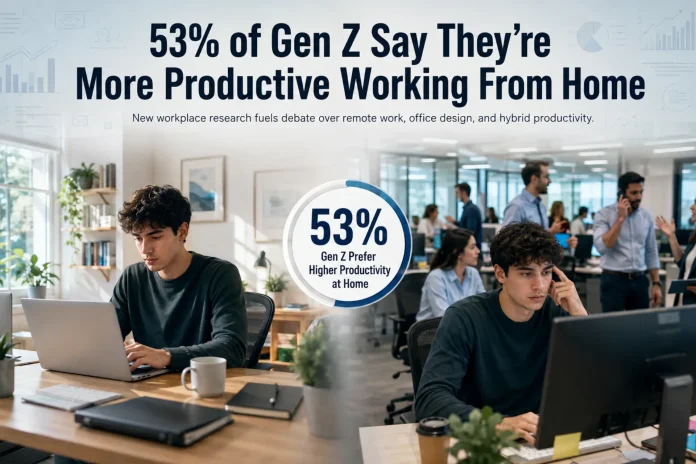
The latest viral post on X made the exact numbers stand out in the heated discussion around remote work: 53% of Gen Z employees claim that they are more productive working from home rather than in the office. This statement, along with pictures highlighting the difference between a quiet work area at home and a stressful office environment, got multiple responses from people who questioned the control of employees, office design, and even the validity of this number as a reflection of productivity vs. preferences.
The number mentioned above comes from the study carried out by 2026 Diamond Interiors Gen Z Workplace Report in collaboration with YouGov. Researchers conducted a survey of 503 UK Gen Z office workers during the period from May to July 2026. Lack of distractions, better sound control, and ability to personalize the workplace are the key factors contributing to this result.
Almost one-third of those surveyed found that their office environment makes concentration difficult due to its open plan design, noise, bad lighting, and disruptions. Close to one-third (29%) were forced to take leave due to stress, while half wanted social gatherings in the office without alcohol.
Diamond Interiors, a UK office-design firm, frames the results as evidence of fixable environmental problems rather than a blanket rejection of in-person work. Rebecca Waller, Head of Design at the company, said:
“These findings highlight an important challenge facing employers. While offices remain incredibly valuable for collaboration, many employees are telling us they do not always feel they have the right environment to focus on individual tasks.”
She added that home often simply offers greater control over noise, interruptions, and comfort.
The firm recommends quiet work zones, better acoustics, natural light, and flexible layouts that support both concentration and teamwork.
UK research comes out at a time when America is having various debates about the return to office mandate. Most employers are still demanding an increase in face time, while young people are still demanding flexible work. According to research by Gallup, 23% of Gen Z workers who can work remotely like to do so; most of them prefer working in hybrid models. Higher productivity while working from home does not necessarily equate to liking working from home all the time.
Other supportive research done by organizations such as JLL and the Mather Institute also reveals the same findings, with younger people desiring to have productive time from home but also preferring to be mentored and networked in person. Increased productivity from home can go hand-in-hand with hybrid working.
This research provides an insight into how some younger workers perceive office spaces. The study does not give conclusive evidence that Gen Z is more productive while working from home, or solve the bigger question regarding which environment enables workers to be more productive.