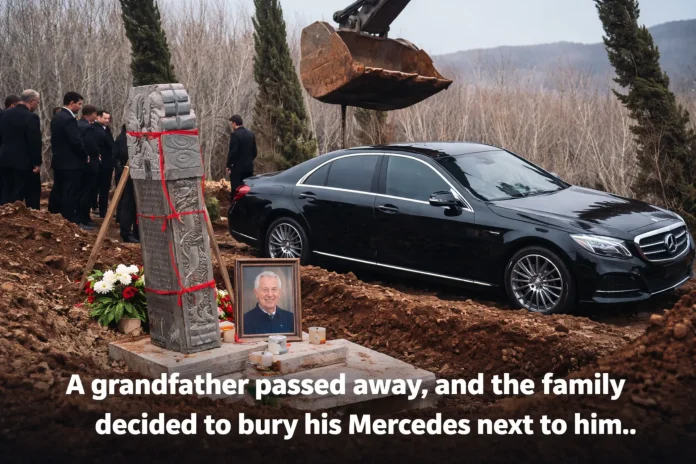
A family in rural China used an excavator to lower and position a black Mercedes-Benz sedan directly beside the grandfather’s grave after his passing. Workers in heavy winter clothing directed the machine to tilt and settle the luxury vehicle into the prepared dirt next to a large ornate stone monument at the burial site. The roughly 54-second video capturing the process spread quickly on social media, drawing attention to the unusual choice of including the car in the final resting place.
The event unfolded at an unidentified rural cemetery marked by bare trees and earth mounds typical of winter conditions in parts of the country. Family members arranged for the sedan to rest adjacent to the tomb rather than inside it, creating a side-by-side placement that kept the grave prominent while adding the vehicle nearby. An excavator handled the heavy lifting under the guidance of on-site workers who gestured and coordinated the careful maneuvering to avoid damage during lowering.
This decision connects to longstanding Chinese traditions around honoring the deceased with personal belongings for comfort in the afterlife. Many families burn paper replicas of cars, houses, and money during funerals so the spirit can receive these items symbolically through smoke. In some cases, actual objects or significant possessions appear in or near burials as a more literal expression of filial piety and continued provision. Here, the real Mercedes served that role without entering the grave itself, blending material display with cultural respect for the grandfather’s life and status.
Such practices reflect deeper beliefs that the dead continue to exist in a realm where everyday needs and symbols of success matter. Rural families with means sometimes extend these customs beyond paper offerings to demonstrate wealth and devotion publicly. The grandfather’s car, likely a symbol of achievement during his lifetime, became part of the gravesite arrangement to ensure he retained access to it or the prestige it represented. This choice also ties into broader patterns where funerals reinforce family bonds and social standing in the community.
Observers online reacted with a mix of surprise and critique, noting the apparent waste of a functional vehicle that could have been sold for charitable causes instead. Some comments highlighted cultural differences in mourning, while others added dark humor about the grandfather “driving” in the afterlife. The video, originally posted on X by an account focused on China-related developments, gained several thousand views shortly after upload but remained limited in mainstream pickup at the time of reporting.
From a journalistic perspective, the story underscores tensions between tradition and modernity in contemporary China. Government campaigns have at times discouraged overly lavish funerals to promote simpler burials and reduce waste, yet personal expressions of grief and status persist, especially in less urban areas. Burying or placing high-value items beside graves raises practical questions about land use and resource allocation in a densely populated nation. At the same time, it reveals how deeply rooted ideas of ancestral care continue to influence even wealthy families who might otherwise embrace more minimalist approaches.
The exact model of the Mercedes remains unclear from available footage, though it appears as a standard black luxury sedan common among successful households. No public details emerged about the grandfather’s identity, the precise province, or the family’s background, leaving room for further local verification. Similar past incidents in China involved individuals requesting burial inside their beloved vehicles per final wishes, but this case stands out for positioning the car externally next to the tomb.
Ultimately, the arrangement illustrates how grief, culture, and materialism intersect in private moments that occasionally surface publicly. Families weigh emotional fulfillment against societal expectations, using tangible symbols like a car to bridge the gap between this life and the next. Whether viewed as excessive or profoundly respectful, the act highlights enduring human desires to provide for loved ones beyond death. For more on traditional Chinese funeral practices, see resources from Britannica on Chinese ancestral rites and established memorial organizations that outline ancestral rites and offerings.