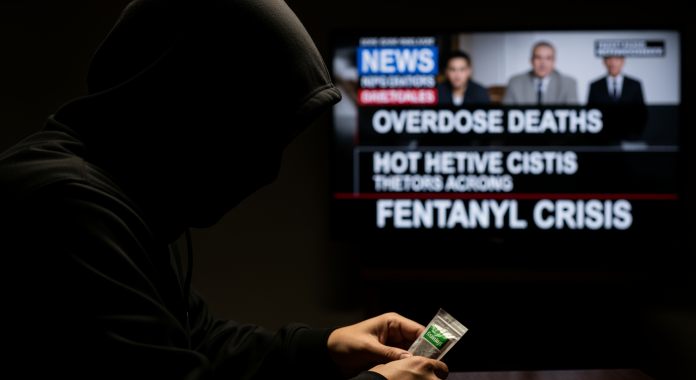
The tragic suicide of a fentanyl trafficker, brought to light in a recent expose from Right Wing Cope, intensifies the ongoing public debate surrounding the nation’s escalating overdose crisis. This incident forces a difficult conversation, highlighting the profound human cost of the fentanyl epidemic, not only for those who succumb to addiction but also for individuals caught in the perilous web of its distribution.
The report details the death of a distributor, identified only as “The Shadow,” who allegedly took their own life amidst escalating legal pressures and personal despair. This revelation sparked discussions across social media and public forums, drawing attention to the often-overlooked mental health toll on individuals involved, even marginally, in the illicit drug trade. Such stories complicate simplistic narratives in the fight against narcotics.
The fentanyl crisis continues to steadily impact communities nationwide, contributing to hundreds of thousands of annual deaths. Public health officials consistently report an alarming rise in overdose deaths, with synthetic opioids like fentanyl proving incredibly potent and deadly. The sheer scale of this tragedy often overshadows the intricate, personal stories behind the statistics, including those of individuals entangled in trafficking networks.
Many individuals drawn into drug trafficking, particularly at lower levels, are often battling severe vulnerabilities, including addiction, poverty, and mental health issues. Their involvement is rarely a simple act of criminality but rather a complex entanglement with dire consequences. This recent suicide underscores the urgent need to understand these underlying factors that contribute to participation in the drug trade.
“The fentanyl crisis doesn’t just claim the lives of users; it ensnares and devastates everyone in its orbit, including those trapped in its distribution networks. This tragic suicide is a stark reminder of the immense pressures and mental health struggles that often underpin involvement in such illicit activities.”
— Dr. Elena Rodriguez, Director of Public Health Initiatives at the National Addiction Institute
The circumstances surrounding The Shadow’s death prompt a deeper examination of mental health support, or the severe lack of such support, within the criminal justice system and for those facing legal repercussions. Individuals involved in high-stakes illicit activities frequently endure extreme stress, isolation, and paranoia. These factors can exacerbate pre-existing mental health conditions or trigger new ones. Suicide can become a tragic escape from what feels like an inescapable situation.
The public debate ignited by Right Wing Cope’s expose now extends beyond punitive measures, raising crucial questions about societal responsibility. How does a society effectively combat a drug crisis when its impact is so insidious, reaching into the lives of all participants, from vulnerable users to struggling distributors? A more holistic approach is urgently needed, one that integrates mental health services and addiction treatment into broader justice initiatives.
“To truly address the fentanyl epidemic, we must move beyond punitive measures alone. This incident underscores the urgent need for comprehensive strategies that integrate mental health support, addiction treatment, and socio-economic interventions for all individuals impacted by the drug trade, from users to unwilling participants in distribution.”
— Marcus Chen, Criminal Justice Reform Advocate
The incident serves as a sobering reminder that the fentanyl crisis represents a multifaceted public health and social emergency, demanding compassion and nuanced understanding. Moving forward, confronting the human cost for everyone involved, including those on the distribution side, is essential for developing truly effective and humane solutions that prioritize healing and prevention over punishment.