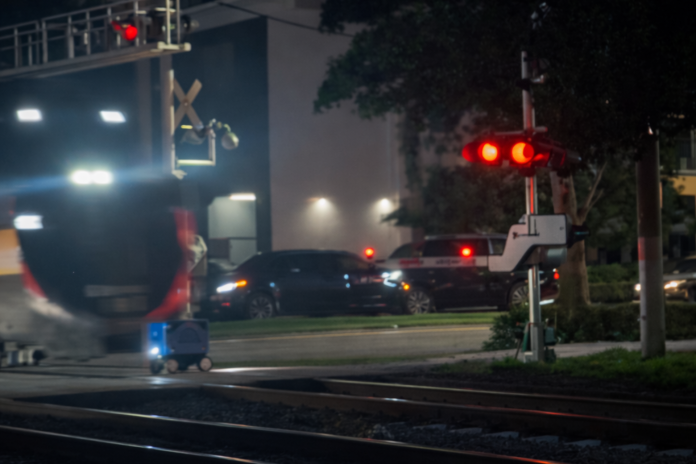
A 10-second dashcam clip is blowing up online right now. Flashing red lights. Lowered crossing arms. Bells ringing. A little autonomous delivery robot sits frozen right in the middle of the tracks. Then the train barrels through. Boom. Robot gone. Debris everywhere.
A tweet from X.
That’s the viral moment people are sharing nonstop, posted by Dexerto on X today, January 16, 2026. If you’ve scrolled X, Instagram, or TikTok in the last few hours, you’ve probably seen it. The caption sums it up:
“A delivery robot has been demolished by a train in Florida after it stopped on the tracks.”
What the footage clearly shows is straightforward. The small, six-wheeled bot looks a lot like the ones Starship Technologies rolls out for food and grocery deliveries approaches the railroad crossing and stops smack on the rails. All the warnings are active: lights flashing, gates down, bells sounding. The robot doesn’t budge. An oncoming train (appearance suggests it could be a Brightline passenger service or freight, depending on who you ask) smashes into it head-on. Pieces scatter along the tracks. In one angle, a small dog pops into frame near the scene, which has people online joking it
“tried to help.”
Here are a few of the images showing what these delivery robots normally look like on sidewalks cute, harmless, zipping around with your takeout:

Why is everyone talking about this? Americans see these bots everywhere now sidewalks in Miami, college campuses, neighborhoods. Florida’s rail lines, especially Brightline’s high-speed routes, already get plenty of attention for safety issues. Then you throw in the perfect mix: cutting-edge AI tech meeting a total low-tech fail. Online reactions are all over the place half cracking jokes like “robot suicide,” “only in Florida,” or “rest in Valhalla little bot,” and half raising legit eyebrows about how reliable these systems really are.
This isn’t even the first time. Back in 2022, Starship robots at Oregon State University had multiple run-ins with trains. They’d get stuck on crossings, ignore signals, and end up smashed by freight trains. Those cases sparked real questions about how autonomous bots handle complicated spots like railroad tracks places where stopping short can be as risky as moving forward.
Right now it’s a meme machine, but tomorrow it could turn into a policy headache. How do cities make room for these robots when the infrastructure tracks, roads, signals was built decades before anyone dreamed of sidewalk bots? Watch for statements from the robot company, the rail operator, or local authorities. Until then, your next delivery might arrive on foot… just in case.