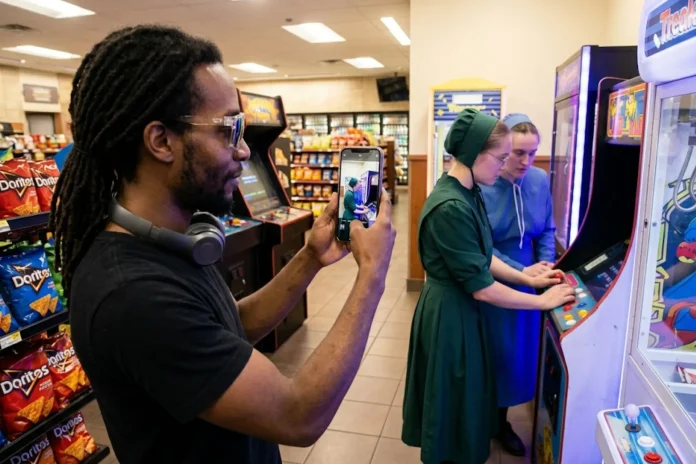
A man filmed several young Amish women dressed in modest long sleeved plain dresses and white head coverings as they lingered near glowing claw machines and arcade games inside the Pilot Travel Center in Morgantown West Virginia.The brief clip captured their visible surprise when they spotted the recording with one crossing her arms defensively while another stepped forward with a neutral gaze and hands near her pockets. Others turned sharply displaying stares that mixed annoyance and curiosity under the bright neon lights of the game area. This ordinary moment at a public truck stops quickly became framed online as a supposed exposure of Amish traditions clashing with modern electricity and entertainment. Yet the scene actually highlights the nuanced differences within Anabaptist communities rather than any outright rule breaking.
The individual approached the group from behind while holding a smartphone in portrait mode and began recording without any introduction or permission. As the women reacted one in a dark green dress folded her arms and looked surprised another in teal blue stared directly at the lens and a third with glasses advanced slightly with a calm expression and subtle gestures near the machines. The filmer continued capturing the encounter before flipping the camera to show his own face revealing a person with dreadlocks reflective sunglasses and headphones who laughed openly at the end of the roughly 15 second handheld video. Ambient arcade beeps and overhead lighting filled the background with no prior interaction or purchases shown. The women simply stood relaxing like any travelers pausing during a journey, yet their body language conveyed clear discomfort at the uninvited attention.
Amish communities follow varied guidelines on electricity depending on their specific affiliation and local Ordnung rules that govern daily life. Old Order groups which represent the vast majority reject direct connections to the public power grid to preserve separation from worldly influences, and they rely instead on alternatives such as diesel generators batteries solar panels or propane for essential needs like barn lighting or refrigeration. New Order Amish show more flexibility with some districts permitting public electricity while others in areas like Holmes County Ohio limit it to inverters or off grid sources to control what devices can be powered. These adaptations stem from a deliberate choice to avoid temptations that could erode community bonds or foster inequality rather than a blanket rejection of all power sources. Verified details from long standing Amish heritage resources confirm that such variations allow practical modern tools without compromising core values of humility and self-reliance. For more on these practices see Amish Heritage on electricity use and Elizabethtown College Amish Studies on technology.
In contrast conservative Mennonite groups including those often identified as Beachy Amish Mennonites incorporate electricity automobiles and limited recreational activities far more readily while retaining plain dress and strong faith commitments. These communities balance tradition with practical adaptations such as home power grids telephones and occasional stops at modern venues to support family life and economic needs without the stricter isolation practiced by Old Order Amish. The women in the video align closely with this Mennonite profile given their presence at an arcade using brightly lit machines which fits within their permitted modern conveniences. Authoritative comparisons of Anabaptist lifestyles note that Mennonites range from conservative plain dress adherents to more progressive ones yet the plain attire here points to a group comfortable with electricity in public spaces. This distinction explains why the clip feels less like a scandal and more like everyday life for those familiar with the communities. Learn more about the differences at Amish Furniture Factory on Amish and Mennonite distinctions.
Social media users quickly pushed back against the sensational caption by pointing out the privacy violation and the normalcy of the scene for the women involved. Many replies highlighted how the filmer created unnecessary drama around strangers enjoying a brief pause at a truck stop with comments focusing on respect for personal space over viral entertainment. The original post and its reposts drew hundreds of thousands of views underscoring the rapid spread of such content online. Broader discussions emphasized that public fascination with these groups often overlooks their agency and the thoughtful ways they navigate technology. In this case the reactions of the women served as a quiet reminder of the dignity owed to anyone in everyday settings regardless of background.
This encounter underscores ongoing societal tensions around religious communities that choose simpler paths yet engage with the modern world on their own terms. Amish electricity practices and Mennonite adaptations demonstrate intentional boundaries designed to strengthen family and faith rather than reject progress outright. The women deserved the same courtesy extended to any other patrons at the Pilot Travel Center instead of becoming unwitting subjects in a quick online narrative. Ultimately the video invites reflection on consent context and the value of understanding diverse lifestyles without reducing them to stereotypes.