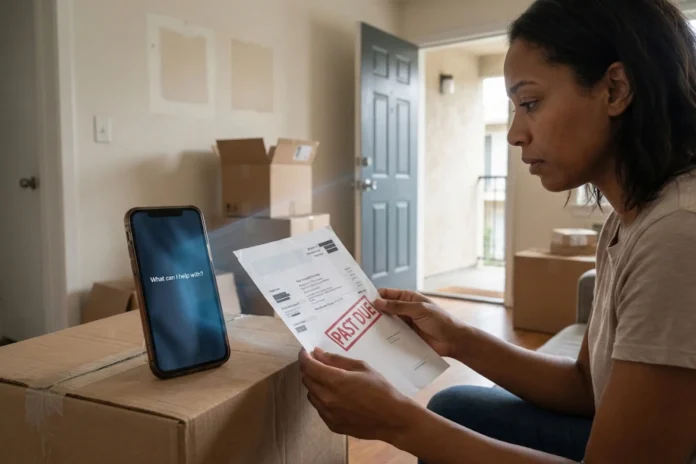
A Raleigh tenant did everything her landlord’s emails told her to do, and she was evicted anyway. Laura Mack, a resident of Colony Townhome Apartments, received an email on November 8 asking when she could pay her outstanding rent balance of $3,934.17. She replied that she wanted to pay on November 30, and she received written confirmation the same day that the date worked. Eight days later, she was served with an eviction notice.
When Mack contacted the leasing office, she said an employee explained that the emails had not come from a person at all. They were sent by Olivia, the apartment complex’s AI assistant, which had mistakenly approved her request. The complex had introduced Olivia to residents in December 2025, explaining that the assistant could answer questions about rent and maintenance around the clock, as Dexerto reported in its coverage of the case, which began with an investigation by WRAL.
What made the mix-up so easy to fall for was the presentation. Earlier emails from Olivia had been clearly identified as AI generated, but the November 8 messages were signed by Colony Townhome Apartments and did not disclose that a chatbot had written them. They also referenced personal details from Mack’s own file, including a bathroom ceiling leak that had taken almost two weeks to repair. “I thought it was someone from the office because all my information was in there and it mentioned my bathroom,” Mack told WRAL.
Despite having the agreement in writing, Mack was evicted on November 19, after going to the Wake County courthouse that morning to try to stop it. She subsequently stayed in a hotel while working out her next steps. “If you told me till the 30th, I’ll get out by the 30th,” she said. “But give me that. You at least honor that. You have to have somewhere where you’re taking responsibility.”
The complex has not yet explained how it will handle the written extension. A spokesperson said the property’s owners were gathering information about the eviction and expected to provide an update the following week. North Carolina state Sen. Jim Burgin called the situation “ridiculous,” said someone should have reviewed the documents before Mack was evicted, and said he will renew his proposed “Bot Bill,” which would require people to be told when they are interacting with AI.
Two details complicate the story further. As Gadget Review noted in its account, the claim that Olivia made the error comes from what Mack says a leasing representative told her, and Colony has not independently confirmed it. No ruling has yet established whether an email exchange like this one amounts to a binding payment agreement, the question on which Mack’s case may ultimately turn.
The Raleigh case belongs to a fast-growing pattern of companies learning the limits of automated judgment, from Ford rehiring more than 300 human engineers after AI failed to match their skills to headline claims that AI now automates 93 percent of US jobs. The gap between those two stories is exactly where Laura Mack fell through.
The case lands at an uncomfortable moment for the property industry, which has handed tenant communication to automated assistants at speed, much as other sectors have handed consequential decisions to systems that can get things badly wrong, from the chatbot blamed in a user’s death to the leasing bot in Raleigh. The legal question under the outrage is a simple one, and no landlord has answered it yet: when an AI agent makes a commitment in writing, in a company’s name, who owns that promise? For now, the only person who has paid for Olivia’s mistake is the tenant who believed it.