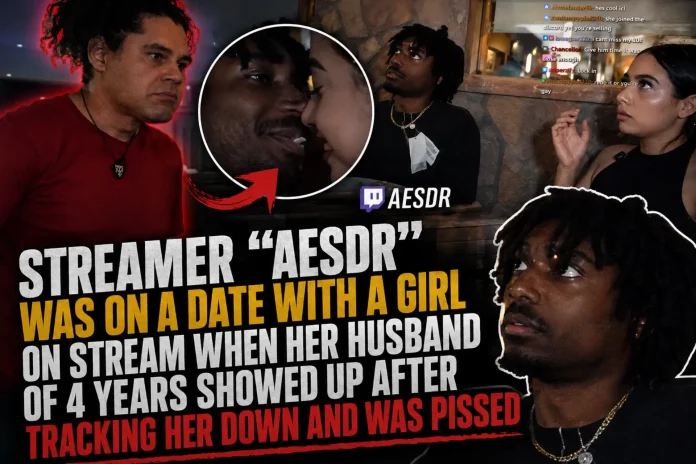
Twitch streamer Aesdr watched his live date turn confrontational on July 25, 2026, when a man claiming a multi-year relationship with the woman arrived at their outdoor table at a Los Angeles-area plaza restaurant and accused her of cheating after placing a tracker on her phone. Thousands of viewers followed every second of the exchange, which unfolded as Aesdr shared pasta and light conversation with his date under patio heaters and neon signs until a visitor in a red shirt stepped into the frame and refused to leave.
The pair first appeared relaxed. Aesdr smiled while accepting a bite of food from the woman, who wore a black top and had her hair pulled back. Chat messages scrolled across the stream as she told him she was enjoying their time and would like to meet again. Moments later both looked up as the man approached. She asked what was going on while he insisted he was looking for his girl and would not stop. He stated he had put a tracker on her phone because she had been all around the city with no clear location. When Aesdr asked who he was, the visitor replied that he was her boyfriend and then referenced a connection as her husband. The woman stood and the argument continued near the tables while Aesdr remained seated at first, before rising with a stunned expression and later asking the camera what had just happened.
Aesdr builds his audience through unscripted in-person livestreams on Twitch, the Amazon-owned live streaming platform that has become a hub for creator-driven reality content. His follower count sits near eleven thousand on his official Twitch channel, with current totals visible on third-party tracker TwitchTracker. The clip spread after an early post on X collected more than 1.5 million views, and additional versions appeared across other platforms under captions that repeated the four-year relationship detail and the tracking claim. Public profiles linked to Aesdr also point to California-based content and earlier date streams that drew online attention.
Many viewers examining the footage have suggested the confrontation may function as a deliberate stunt designed for rapid online spread. Comments noted the timing of the arrival during peak stream engagement and questioned the appearance of the visitor’s arm tattoos. Streamers who rely on dramatic public moments often face such scrutiny because high-intensity clips reliably increase visibility and revenue, and similar viral stream moments have fueled similar speculation in the past. Whether arranged or spontaneous, the sequence delivered exactly the kind of disruption that platforms reward with algorithmic boosts.
Presenting personal conflict as entertainment carries clear ethical problems. Broadcasting a heated exchange without the full consent of everyone involved turns private pain into public spectacle and can intensify real distress for the people on camera, as past public streamer relationship disputes have shown. Claims of phone tracking normalize invasive surveillance that courts and privacy advocates treat as serious boundary violations. When audiences consume these moments as casual content the practice risks dulling sensitivity to actual relationship harm and teaching younger viewers that confrontation equals attention. Responsible creators and platforms share a duty to weigh those costs before amplifying the next viral dispute.