

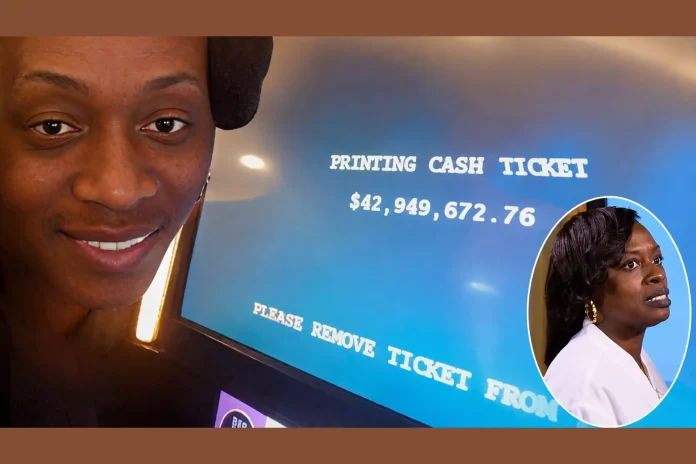
There is once again buzz on social media about a shaky video taken in an overcrowded Queens casino. The video captures the moment when a woman is taking a selfie while standing in front of a slot machine that says: “$42,949,672.76.” She appears to be shocked and happy. However, the story is not what many people think it is based on the recent posts online.
The video that dates back to 2016 when it was aired by the television program Inside Edition shows Katrina Bookman, who is a single mom of four kids from New York.
On August 24, 2016, Bookman played the Sphinx Wild penny slot machine at Resorts World Casino New York City in Jamaica, Queens. After making a 40-cent bet, the screen lit up and made some unusual noises flashing that shocking jackpot message. What the machine gave her was a ticket worth $2.25.
Bookman and her companion captured the madness on camera as she told reporters that she was thinking of taking her family out for a lavish dinner. The jackpot result was to help her son open a barber shop. Upon returning the following day to claim the prize, they were told the machine had malfunctioned. She would only get a free steak dinner and a ticket worth $2.25.
In modern sources, Bookman stated that
“I feel I should win the max and I will take him out for a steak dinner, as the offer was an insult.”
All machines carry the disclaimer:
“Malfunctions void all pays and plays.”
Regulators rely on internal logs, not just screen displays, because software glitches can create impossible jackpots on electronic slots.
Bookman sued Resorts World Casino, parent company Genting New York, and manufacturer IGT. Courts ultimately ruled in the casino’s favor after years of proceedings. She received the $2.25 but nothing more.
Modern slot machines run on certified software with strict payout tables and regulatory oversight. Display errors occur occasionally due to technical issues, but gaming commissions prioritize verifiable machine data over visuals. This case shows the importance of protecting the vulnerable in cases dealing with casinos, their fine print, and the importance of consumer protection in gambling.
Many argued that the case is unfair to casinos and that they could have given better offers to Bookman, considering her situation, background, and how she got out of foster care and homelessness. Others point out that honoring impossible wins would break regulations and undermine the system.
Decade-old clips like this resurface because the emotional hook single mom, tiny bet, massive apparent win drives shares and outrage. Recent posts often drop key details: the malfunction confirmation, regulatory findings, and court outcome. It’s a reminder that viral content can blur timelines and skip context.
Bookman’s story is genuine heartbreak mixed with standard industry rules. Casinos can’t pay out what machines aren’t programmed to award. As gambling expands, these incidents spark important talks about player expectations and responsible gaming.

