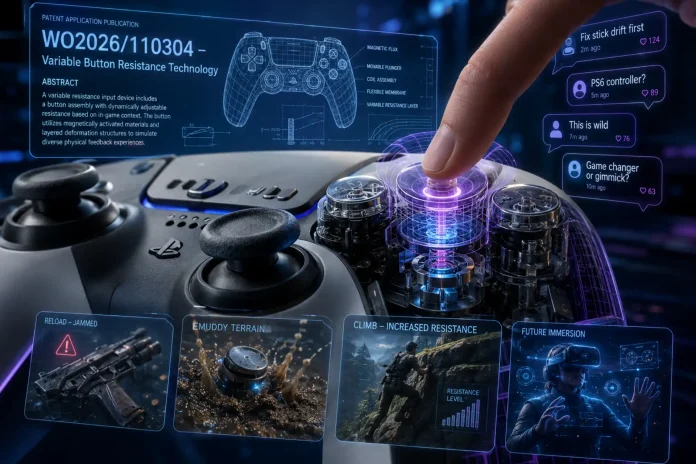
Gamers across X, Reddit, and YouTube are losing it over claims that Sony just patented a PlayStation controller that could literally “trap” your fingers mid-game. One viral post joked it would finally make reloading feel like a real struggle until the button clamps down like an enemy grab. The mix of hype, memes, and “fix the stick drift first” complaints has exploded online, turning a patent filing into the week’s hottest gaming debate.
An application arrived through Sony Interactive Entertainment on November 21, 2024. WIPO made it public May 28, 2026 – patent ID WO2026/110304. Called “Operation Device, Information Processing Apparatus, Control Method Thereof, and Program,” the minds behind it? Toshiyuki Ando, Chenghui Liu, along with Shinichi Hirata.
Imagine pressing a button that changes how hard it feels, depending on what happens in the game. These special rubbery materials respond to magnets, shifting stiffness on demand. Instead of just two triggers like on the PS5 controller, this idea spreads that effect to many buttons. The material softens or tightens when exposed to invisible magnetic signals shaped by gameplay moments. It moves beyond old designs by making more parts of the controller feel alive during play.
Patent examples include a reload button that stiffens to simulate a weapon jam, buttons that soften while trudging through mud or swamps, and increased resistance during climbing or heavy lifting. One standout idea: a button that lets your finger sink in before hardening around it to mimic being grabbed or trapped in-game, forcing extra effort to “escape.”
As GameSpot reported:
“The patent goes on to describe an alternative button effect where a player’s finger can sink into it, before it hardens up around the finger afterwards. This is probably the strangest of the solutions…”
Eurogamer noted it could adapt based on gameplay or user preferences, with the material responding to magnetic fields for real-time changes.
The patent is real and describes variable button resistance for immersion. However, Sony has made no announcement about a commercial product. The “finger-trapping” framing comes from media interpretations and social buzz, not Sony’s official wording. Patents protect ideas they don’t confirm shipping hardware. Many experimental Sony filings, including early DualSense concepts, never reach shelves.
This builds directly on DualSense success in titles like Spider-Man 2 and Astro’s Playroom, where adaptive triggers made actions feel physical. A next-gen version could deepen that for face buttons, sticks, and grips potentially huge for VR, horror, or narrative games.
But excitement comes with questions. Players want Sony to tackle stick drift, comfort for long sessions, accessibility options, battery life, and durability before adding complex magnets or materials. Fluid-filled alternatives mentioned in the patent raise even more reliability flags.
Sony has a track record of pushing haptics, from original DualShock vibration to today’s advanced feedback. This fits that pattern, hinting at possibilities for a PS6-era controller around 2028-2029. Yet, as always with patents: cool on paper, far from guaranteed in your hands.
The buzz shows gamers crave bolder immersion but also practical fixes. Whether this becomes the next big DualSense upgrade or stays as IP protection, it reveals where Sony’s R&D is heading. Stay tuned; the controller wars are far from over.