

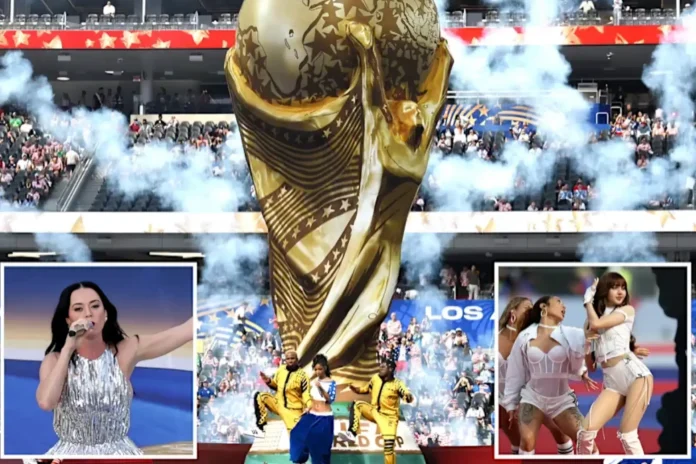
SoFi Stadium pulsed with energy on the night of June 12, 2026, as flashing lights swept across a packed crowd and the roar of anticipation filled the Los Angeles air. Fans from around the world had gathered for America’s opening night of the largest FIFA World Cup in history, a 48-team tournament co-hosted by the United States, Canada, and Mexico. In the midst of this electric atmosphere, Grammy-winning rapper Future and South African star Tyla took the stage for a high-energy performance of their new track “Game Time,” the official FIFA World Cup 2026 anthem.
A short video, posted online by someone named Dom Lucre, spread fast across platforms. The moment he hit share, eyes turned. He wrote beneath it:
“This feels more American than anything before.”
What followed was a mix fame, athletic energy, and national pride all rolled into one stretch of ceremony. That slice of the event unfolded across three cities, marking something rare in history.
Out came Game Time near the end of May in 2026, tucked inside the official World Cup album for that year. This was the first time these two artists joined forces on a track. Cirkut handled the production, blending Future’s well-known hip-hop beats with Tyla’s amapiano vibes that have spread worldwide. According to Future, the music needed to reflect something huge so they built it loud, wide, alive. The World Cup gathers people everywhere, he said. Their song had to do the same. When the beat drops, there’s no doubt it’s game time.
Down near Los Angeles, just under an hour and a half before the U.S. soccer team beat Paraguay four goals to one, fans filled SoFi Stadium called LA Stadium during the event for something big. That match kicked off their group stage in front of a loud crowd buzzing after a flashy show. Last in line among several cities hosting kick-off moments, it stood out more than those earlier ones held across borders in places like Mexico City and up north in Toronto. Before players hit the field, world soccer’s top official, Gianni Infantino, put it plainly one massive moment where sport, sound, and spectacle meet for everyone watching everywhere
The star-studded lineup also featured Katy Perry performing “Wonder,” LISA of BLACKPINK alongside Anitta and Rema on “Goals,” and other acts. Tyla’s rapid rise from South African breakout artist to international stage headliner added global appeal, while Future’s presence brought hip-hop prominently into the World Cup spotlight for the first time in this manner.
Dom Lucre’s framing of the event as “the most American year we have ever experienced” is subjective commentary reflecting excitement over U.S. hosting and cultural elements. It is presented as opinion, not verifiable fact. No credible sources indicate the performance was misrepresented or staged.
One thing became clear right then America is stepping further into the world of global football, matching FIFA’s push to mix sports with wide-reaching entertainment. Not just music but mood shifted when hip hop met amapiano and pop under bright lights, turning “Game Time” into more than a song a pulse before the first whistle. Across borders and cultures, the performance lit up screens as the 2026 World Cup began its journey through three countries at once. What came next wasn’t quiet anticipation; instead, joy spread fast among crowds who felt part of something bigger from the start.

