“Friendly” Crocodile Bites 75-Year-Old French Tourist at Casa Cenote in Tulum After Visitors Threw Rocks to Provoke It
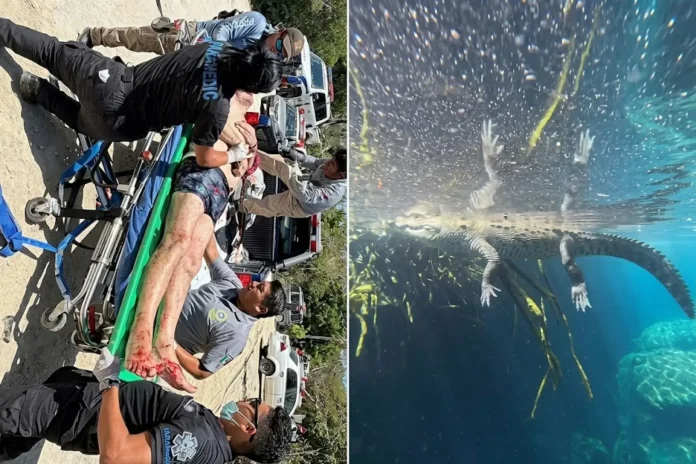
The incident took place around 11 a.m. at Casa Cenote, a brackish open-air cenote in the Tankah area of Quintana Roo’s Riviera Maya. Panchito had lived at the site for years, becoming a social media fixture for tolerating snorkelers and divers in the mangrove-lined channel that feeds into the Caribbean. Witnesses described a group of tourists repeatedly hurling stones at the animal near the bank. The attack followed, marking the first documented incident involving the crocodile despite years of close human contact.
Panchito is Crocodylus moreletii, the Morelet’s or Mexican swamp crocodile, listed under special protection in Mexico’s NOM-059-SEMARNAT-2010. Federal law prohibits harassment of protected wildlife, and authorities had previously warned that habituation does not erase natural defensive instincts. In confined waters with limited escape routes, even tolerant individuals can bite when cornered or threatened. Mexico’s environmental ministry maintains the protected species list that covers this crocodile.
The victim, identified as Jean Jaques Kerempranas, received on-site first aid before ambulance transport to Costamed Hospital, where he remained in stable condition. Paramedics treated visible injuries to his lower limbs and arm. No prior bites by Panchito had ever been recorded despite years of unregulated tourist contact.
Casa Cenote draws visitors for its clear waters, fish, and unique mix of fresh and brackish environments, but the lack of consistent enforcement around the resident crocodile created conditions for escalation. Dive operators highlighted the animal as an attraction without formal distance guidelines or barriers. Specialists note that repeated non-threatening exposure reduces fear but leaves territorial instincts intact, particularly for a species known to defend space or react to direct threats. The dynamic mirrors incidents at safari parks where habituated animals lashed out after prolonged human proximity, and at hotels where crocodiles entered kitchens seeking food.
Tulum municipal authorities are now coordinating with PROFEPA, Mexico’s federal environmental enforcement agency, on tighter controls. Plans include new signage, operator permit requirements, prohibitions on close-proximity wildlife diving, and more rigorous enforcement of existing environmental rules. The measures aim to close a regulatory gap that allowed unsupervised interactions around a protected species at a site drawing thousands of visitors weekly.
Whether Panchito remains at Casa Cenote or is relocated, the episode has reset expectations for operators and visitors across Quintana Roo’s cenotes. Tourism revenue at popular open-water sites depends heavily on wildlife proximity as a draw, but regulators now face pressure to set enforceable distance guidelines and barriers where none existed. For travelers, the lesson cuts clean: keep a respectful gap, obey posted rules, and never throw anything at a wild animal for content. Related incidents include British tourists handling blue-ringed octopuses for photos and Australian veterinarians removing objects from pythons that residents had fed, both illustrating what happens when visitors treat wildlife as props.
Environmental officials continue to assess next steps, including the possibility of relocating Panchito. No decision has been made. The broader debate in Quintana Roo centers on reconciling tourism revenue with genuine ecosystem protection at cenotes that operate as de facto wildlife attractions. Future policy could set a template for sites where charismatic species and high visitor volume collide daily.