

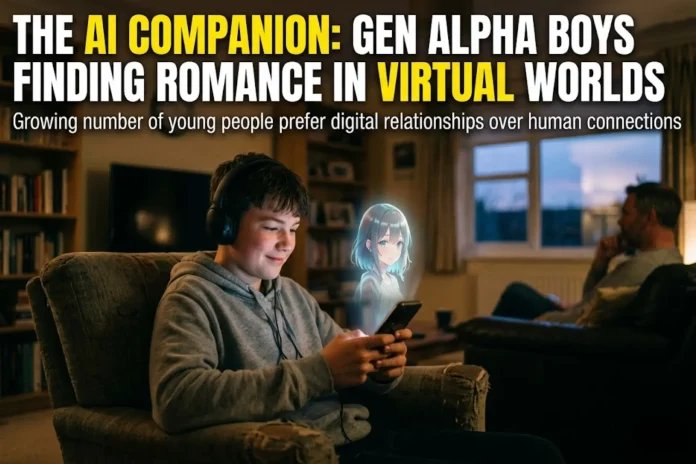
Most Gen Alpha boys now prefer to have relationships with AI than with other people according to a survey of around one thousand boys aged twelve to sixteen across the United Kingdom. The study found that fifty eight percent of participants view AI connections as easier to manage because they retain full control over every exchange. This pattern reveals a generation drawn to technology that eliminates the uncertainty and emotional risks inherent in human interactions.
Eighty percent of the boys have already conversed with AI chatbots while thirty six percent favor those exchanges over talks with family or friends. Another twenty six percent prefer the attention AI provides compared to real life connections and twenty percent know at least one peer their age engaged in what they call a relationship with an AI chatbot. These insights stem from direct listening sessions and surveys conducted in secondary schools throughout England Scotland and Wales as part of the Voice of the Boys report by Male Allies UK.
The organization behind the research works to promote positive male allyship and better support for boys navigating modern challenges. Business psychologist Lee Chambers, who founded the group, describes AI chatbots as submissive and reassuring tools that let users craft an ideal companion and walk away at any moment. He cautions that the instant gratification built into these systems may gradually shape expectations for how relationships function in everyday life.
Boys choose AI companions largely because these tools offer total command of the dialogue without any chance of rejection misunderstanding or emotional pushback that often arises in school or peer settings. The chatbots remain constantly available and can be shaped to reflect any desired personality or interest creating a safe predictable space that feels more rewarding than the unpredictable nature of human bonds especially during the sensitive teen years. This appeal stems from a desire for affirmation on demand and freedom from the effort required to maintain real life friendships or family ties.
One clear example from the data shows nearly half the boys aware of nudification apps circulating at school with nine percent admitting they created sexual images of friends or even family members using AI generators. Others engage in role playing or simulated romance where the AI partner always agrees provides endless support and never demands reciprocity or accountability. Such uses highlight how the technology moves quickly from casual conversation into intimate territory that bypasses the consent negotiation and mutual vulnerability central to healthy human connections.
If left unaddressed these preferences carry substantial risks for the entire generation including stunted development of empathy negotiation and resilience as boys grow accustomed to interactions that demand nothing in return. Recent research on AI-driven content creation and creator economy platforms shows similar patterns of instant gratification affecting real-world expectations. Over reliance on AI companions can lead to distorted views of intimacy where real people are expected to act subservient or agreeable at all times potentially increasing isolation and weakening social skills over time.
Without opportunities to practice reading cues handling conflict or offering support in return many may enter adulthood with deficits in emotional regulation and relationship building that affect everything from careers to personal well being. This trend echoes broader concerns seen in high-profile celebrity cases involving digital platforms and public perception of relationships.
Parents and educators can raise these boys properly by prioritizing face to face activities that build unscripted social confidence such as team sports group projects or family outings without devices. Setting shared boundaries around screen use while openly discussing privacy risks and the differences between AI responses and genuine human emotions helps teens view technology as a supplement rather than a substitute. Expert guidance encourages building trust through curious conversations rather than lectures and carving out regular screen free time to strengthen real world bonds that foster empathy and mutual respect.
The survey ultimately serves as a call for society to respond with intention before these habits deepen. By addressing the underlying needs for control and connection through proactive support Gen Alpha boys can gain the tools to thrive in both digital and human spaces. This balanced approach ensures technology enhances their growth without diminishing the irreplaceable value of authentic relationships. For more on shifting youth culture and digital influences, see related coverage on youth violence and community challenges or viral historical reflections sparking generational debates.

