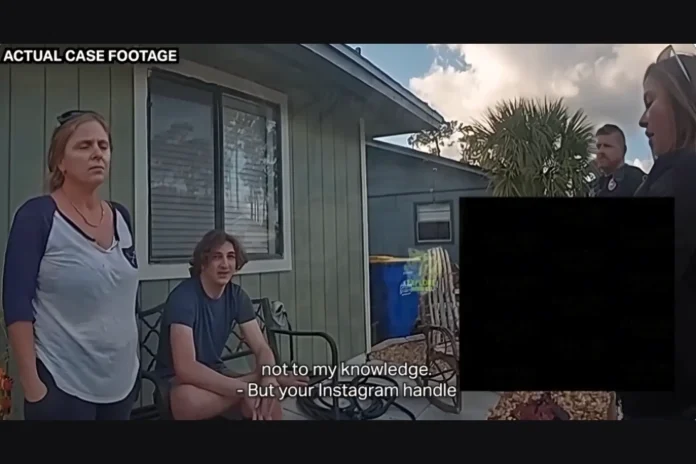
A viral bodycam video circulating on X has triggered intense debate across the U.S. internet, showing what is claimed to be FBI agents questioning and arresting a 19-year-old Florida man over controversial Instagram posts linked to an account named “incel_revolution_soon.” The video has circulated quickly; however, none of the major news organizations or the FBI have yet been able to verify any of the claims made.
The video is almost six minutes long and depicts federal agents coming to the house of a teenager, Lucas Nevcherlian, 19 years old, asking him about social media posts that make use of misogynistic and antisemitic phrases associated with the incel movement.
A tweet from X.
Agents are heard reading alleged posts aloud. Nevcherlian responds defensively, saying,
“It’s all just dumb s***,”
and at one point asks,
“Show me the proof.”
In other moments, he describes the content as
“jokes” or “shitposting.”
The video also shows his mother present during questioning, reacting visibly as agents explain concerns about online rhetoric.
According to circulating claims, agents referenced Elliot Rodger during questioning, linking the posts to past mass violence cases. A friend or associate was later questioned, where Nick Fuentes was mentioned in discussion of online extremist communities.
The teen appears cooperative but anxious throughout the interaction before being placed in handcuffs and taken away.
Online reactions split sharply. Some users warn about speaking to law enforcement without legal counsel, while others frame the incident as an example of “overreach” into online speech. Others argue the content crosses into genuine threat territory due to its language and ideological associations.
The case real or misrepresented feeds into an ongoing legal gray zone in American law: when does offensive online speech become a prosecutable threat? Courts generally protect “distasteful” or “edgy” expression, but not direct or credible threats of violence.
Law enforcement agencies have increasingly monitored incel-related communities, citing past attacks inspired by figures like Elliot Rodger.
Whether fully accurate or partially misrepresented, the footage highlights a growing tension in 2026 between internet culture and real-world consequences. Online “shitposting” now exists in a space where law enforcement, platform moderation, and public perception increasingly overlap raising questions about how far free expression extends before legal accountability begins.