

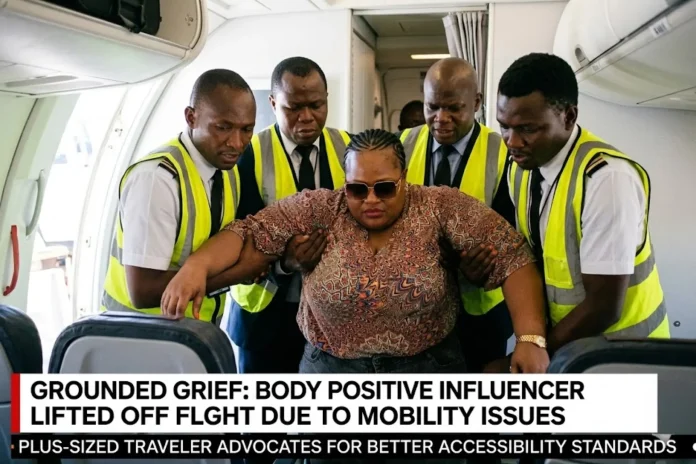
A viral video shows Nigerian disability advocate and influencer Dorathy Osaronu being carried out of an Air Peace aircraft cabin by multiple ground crew members because her mobility limitations require full physical assistance to exit the plane. The 41 second clip captured inside the narrow economy class aisle depicts at least six to eight male staff in suits and bright yellow high visibility vests coordinating to lift and maneuver her semi seated form through tight quarters near the door. Osaronu wearing a colorful patterned top gray stretch pants sunglasses gold jewelry and braided hair with a red scrunchie remains calm with a neutral expression as the team bends low adjusts grips repeatedly and supports her full weight by hand without visible mechanical aids.
Her overlaid quote in the footage states put yourself in my shoes and see if you can walk in it for an hour while the visible strain on the workers faces and bodies underscores the physical effort involved in the confined space. The incident which took place on a routine flight from Murtala Muhammed International Airport in Lagos has ignited widespread discussion about the realities of zero mobility passenger assistance in commercial aviation. Dorathy Osaronu who posts as @officialdorathyosaronu on Instagram describes herself as the Duchess of Onne Kingdom a philanthropist content creator PWD advocate brand influencer and body positivity advocate.
Dorathy Osaronu who posts as @officialdorathyosaronu on Instagram describes herself as the Duchess of Onne Kingdom and a zero mobility wheelchair user focused on advocating for persons with disabilities in Nigerian air travel. In her own social media content she has shared similar experiences including gratitude to Air Peace management Partners Health Care and federal aviation officials for enabling accessible flights and she documents both her weight loss progress and the practical challenges of boarding or exiting aircraft. The video which aligns with her recent captions about needing a village of support to enter or exit planes highlights the manual nature of such assistance where staff must physically carry passengers when wheelchairs cannot fit the aisle or stairs.
This approach follows standard protocols for passengers unable to self ambulate yet the footage reveals the intense physical demands including repeated grip changes and close body contact that place direct loads on the crew in the limited cabin environment. No specific flight number or aircraft details appear in the clip but the interior matches typical Air Peace narrow body jets operating domestic routes. The struggle evident in every frame shows the crew leaning in with focused expressions as they navigate the blue carpeted aisle past overhead bins marked with labels like 1 DF and medical signage while supporting Osaronu whose relaxed posture contrasts with their evident exertion.
One staff member briefly smiles amid the effort as others check positions or adjust holds and the shaky handheld camera captures the tight maneuvering required to move her toward the exit without incident. Public responses across platforms have emphasized worker safety risks noting that repeated heavy lifts can lead to long term injuries for ground staff whose roles already involve significant physical labor. Observers have questioned whether airlines should implement weight based pre flight screening or invest in specialized lifting equipment to reduce manual interventions while others highlight the empathy shown by the team in assisting passengers like Osaronu. For full details on airline passenger assistance policies see the official Air Peace guidelines.
This case brings forward important considerations about how individual mobility needs intersect with the operational limits of public transportation systems. Osaronu frames her advocacy around gratitude for life and incremental health improvements through her documented weight loss journey yet the viral spread of the video has spotlighted broader societal questions regarding body acceptance accessibility and the shared responsibilities in confined public spaces. Health data continues to show connections between severe mobility challenges and rising obesity rates worldwide and Nigerian aviation authorities oversee standards designed to balance passenger rights with crew safety. Additional information on these regulatory frameworks is available through the Nigerian Civil Aviation Authority resources.
The footage ultimately illustrates that compassion for personal health struggles must coexist with practical solutions that protect frontline workers and maintain efficient service for all travelers. Airlines may explore enhanced pre boarding assessments or equipment upgrades to minimize such intensive manual carries while advocates like Osaronu continue pushing for inclusive policies. Global health perspectives underscore the value of sustainable changes that improve mobility over time and this incident whether seen as a call for empathy or accountability reinforces the need for thoughtful approaches in aviation. For comprehensive data on related trends the World Health Organization fact sheet on obesity offers key insights.

