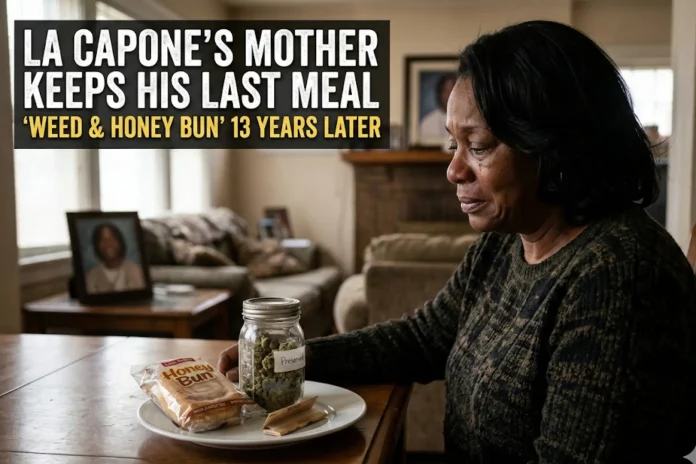
The mother of slain Chicago drill rapper La Capone has shared a photograph of the honey bun and bag of marijuana her son left in his room on the day armed rivals took his life thirteen years ago. She has preserved those simple items in plastic bags ever since finding them after the tragedy and now feels compelled to show the world what remains of that ordinary afternoon in 2013. The image pairs a vibrant portrait of the young artist with the sealed relics, including two lighters, and has struck a chord online, amassing nearly 900000 views in a matter of hours where the post first appeared.
On September 26, 2013, the seventeen-year-old whose legal name was Leonard Anderson was shot in an alley near 70th Street and Stony Island Avenue while on his way to record music. The attack stemmed from ongoing tensions with a rival faction and resulted in a conviction that sent the shooter to prison for forty five years. La Capone had been gaining attention in the emerging drill scene as an affiliate of the Glo Gang collective before his promising career was cut short.
His mother discovered the snack food and a small quantity of marijuana exactly as he had left them that morning and chose to keep them as irreplaceable symbols of her loss rather than clear them away with the rest of his belongings. The preserved honey bun sits inside a clear bag bearing a printed label while the marijuana rests in another alongside the lighters all captured in a stark top down view that contrasts sharply with the lively outdoor photo of her son. She has described the items as something she simply cannot release, even after more than a decade reflecting a form of mourning that many parents in similar situations quietly endure.
This deeply personal revelation offers a poignant reminder of how grief lingers in the smallest details long after the public spotlight fades. Parents who lose children to street violence often cling to whatever tangible connections survive the chaos, and in this case, those connections happen to be everyday snacks and a bit of cannabis from a typical day. While some online reactions lean toward humor about the vintage marijuana, others highlight the universal pain of a mother unable to move on from the last moments she shared with her child a sentiment that resonates far beyond the hip hop community.
In the years since La Capone passed the Chicago drill genre has continued to evolve, yet stories like this one keep the focus on the human cost behind the music and the rivalries. The mothers and families left behind carry burdens that no conviction or tribute track can fully ease, underscoring the need for greater attention to violence prevention in affected neighborhoods. By sharing these items publicly La Capone s mother has invited the world to witness her ongoing healing process in a way that feels both vulnerable and profoundly relatable.