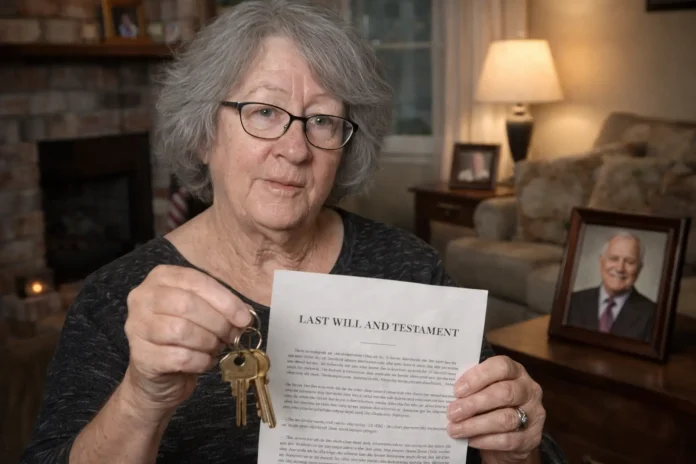
Jane Sayner, a retired market worker, began renting the modest brick unit in St Albans, a suburb of Melbourne, Australia, around the late 1990s. Her landlord, John James Perrett, a local pharmacist and property investor who passed away in September 2020 at age 86, left the property to her after years of appreciating her reliability. Sayner not only paid rent on time but also maintained the home meticulously, tending to the garden and treating the place as her own, which deeply impressed Perrett.

Perrett, who had no close family, made the decision while battling Parkinson’s disease in a nursing home. He contacted Sayner by phone to inform her of his intentions and connected her with his solicitor to handle the details. After his death, the will was executed, transferring ownership of the unit to Sayner outright, along with another property bequeathed to a different long-term tenant. The bulk of Perrett’s estimated $19-20 million estate was allocated to the Royal Melbourne Hospital’s nephrology department, in recognition of the care he received there following a kidney transplant decades earlier.
This heartwarming viral story first surfaced in Australian media in 2022 but has recently gained renewed attention online, accumulating millions of views on social media platforms. A viral post on X featuring an illustrative image of a cozy home and keys has sparked widespread discussion, with many celebrating the rare act of kindness between landlord and tenant. Others have noted the practical realities Sayner now faces, such as ongoing property taxes and maintenance costs, though the inheritance freed her from rent payments in her later years.
In an era when landlord-tenant relationships often make headlines for disputes and evictions, Perrett’s gesture stands out as a profound example of mutual respect yielding unexpected rewards. It highlights how personal connections can transcend contractual obligations, offering a counterpoint to broader housing affordability challenges. Stories like Sayner’s remind us that decency and consistency can sometimes lead to life-changing outcomes, even if such outcomes remain exceptionally rare.
For more details: