

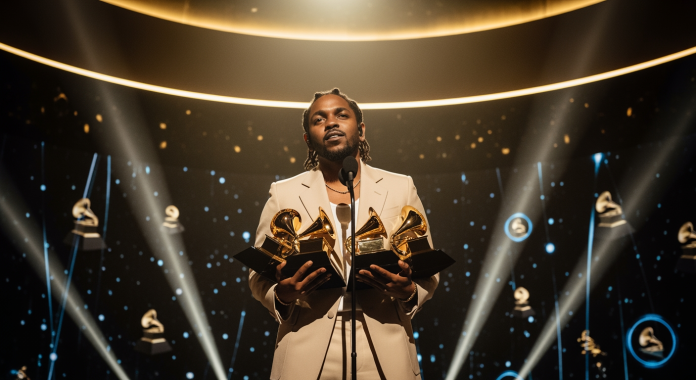
Kendrick Lamar solidified his place in music history, accepting the Grammy for Record of the Year at the 2025 Grammy Awards. This win, alongside a series of other major accolades, cemented his continued dominance in the music industry.
Lamar’s career is built on a foundation of critical acclaim and a willingness to challenge norms. His lyrical prowess often explores complex themes of race, identity, and social justice, earning him a devoted following. The year 2025 marked a significant chapter for his artistic vision, especially following a highly publicized rivalry with Drake.
The chart performance of tracks from his album was nothing short of phenomenal. “Luther,” a powerful track known for its introspective lyrics, spent an astounding 13 consecutive weeks at number one on the Billboard Hot 100. Simultaneously, “Not Like Us” became a cultural touchstone. This track, born out of the rivalry with Drake, ignited widespread conversations about artistry and authenticity within the hip-hop landscape.
The 2025 Grammy Awards proved a coronation for Kendrick Lamar. He secured major wins, including Record of the Year, Song of the Year, Best Music Video, Best Rap Song, and Best Rap Performance for “Not Like Us.” These trophies recognize his profound influence on the genre and his commitment to artistic integrity, solidifying his place among hip-hop’s elite.
Lamar’s continued resonance stems from his uncompromising artistic vision. Fans and critics consistently praise his lyrical depth, honesty, and willingness to challenge the status quo. His ability to connect with audiences on a deep, emotional level has ensured his sustained popularity, generating dialogue and pushing boundaries.
This continued dominance has profound implications for the future of hip-hop. Lamar sets a standard for lyrical excellence, artistic integrity, and cultural relevance. His success encourages other artists to embrace authenticity and engage with meaningful subject matter, helping to shape the genre’s direction. Beyond the awards and hip-hop charts, his impact extends into broader cultural conversations, promoting dialogue and a deeper understanding of music’s power.

