The 15th National Games of China officially concluded this week, marking the first time Guangdong, Hong Kong, and Macao co-hosted the event. Often called China’s “mini-Olympics,” the month-long November 2025 competition drew thousands of athletes to the Greater Bay Area, showcasing top-tier performances in athletics, aquatics, gymnastics, and team sports.
But while medals were handed out to human competitors, it was two unlikely stars — the official mascots — who captured the nation’s attention online.
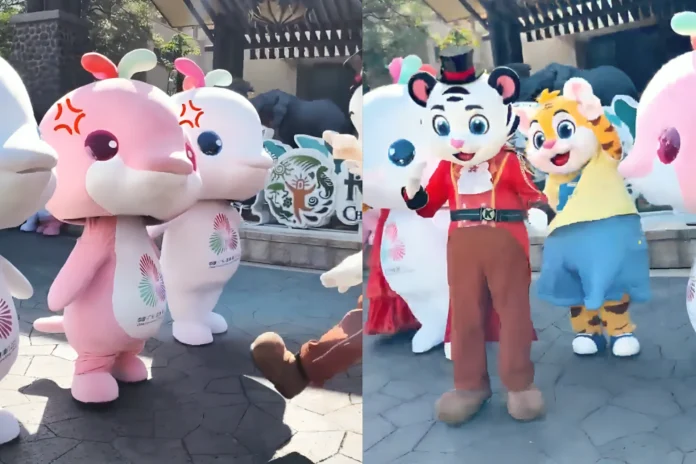
Xiyangyang, pink, and Lerongrong, white, were unveiled as the Games’ official mascots in early November. Designed to resemble the Chinese white dolphin — a protected species native to the Pearl River Delta — the mascots’ rounded bodies, expressive faces, and playful demeanor were meant to symbolize unity, joy, and environmental awareness.
Instead, social media users quickly dubbed them the “Greater Bay Chick” for their plump shapes and beak-like snouts, sparking a flood of memes, fan art, and viral videos. Far from harming their image, the nickname propelled them into cultural stardom.
Throughout the Games, Xiyangyang and Lerongrong wowed crowds with surprisingly agile dance routines. Sporting 16kg costumes, the mascots performed handstands, jumps, synchronized battles, and comedic skits, often leaving audiences in stitches. One viral clip shows Lerongrong holding a perfect handstand amid roaring applause, while TikTok and Facebook users recreated the duo’s energetic choreography in their own dance-off videos.
Their popularity also boosted tourism. The mascots made appearances at key sites across Guangzhou, Hong Kong, and Macao, drawing families eager to see the stars they had come to adore online.
One standout moment came at Guangzhou’s Chimelong Safari Park. A promotional video posted on November 30 by @Guangzhou_City shows Xiyangyang and Lerongrong facing off in a playful “dance battle” against the park’s animal mascots, including a panda and a tiger.
Set against the park’s scenic backdrop, the 30-second clip featured individual spotlights, group choreography, and high-energy flips and spins, culminating in a triumphant freeze-frame pose. The video has racked up thousands of views and sustained the mascots’ viral momentum well after the Games concluded.
By December 1, Xiyangyang and Lerongrong had cemented their place as breakout stars of the Games. Beyond entertainment, their appearances continue to drive tourism, merchandise sales, and family engagement across Guangdong.
For many, the mascots provided a rare, playful contrast to the formal competition, turning the National Games into a cultural moment accessible to children and adults alike. As China positions the Greater Bay Area as a hub for creativity and international tourism, the mascots have become ambassadors of regional spirit and joy.
Though athletic champions were crowned across dozens of sports, one title remains up for debate online: China’s official “Dance King.”