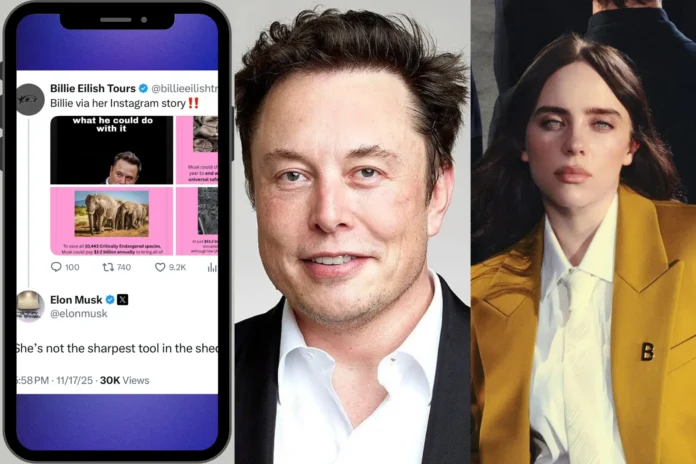
Elon Musk just dismissed Billie Eilish as not the sharpest tool in the shed
after the singer unleashed a profanity-filled attack on his wealth and priorities.
The 23-year-old pop star posted a series of Instagram Stories last week that quickly went viral. She shared graphics that outlined how Musk’s fortune could tackle major global crises. One slide highlighted that an annual investment of approximately $40 billion could help alleviate world hunger by 2030, according to estimates from the United Nations World Food Programme.
Another highlighted the $53.2 billion needed to rebuild Gaza and parts of the occupied West Bank following years of conflict. Other slides mentioned providing universal clean water or saving thousands of critically endangered species.
Eilish ended her posts with her own blunt message on a black background:
f***ing pathetic p***y b***h coward.
She never tagged Musk directly, but the target was obvious, especially as reports continue to project him becoming the world’s first trillionaire through Tesla stock growth and other ventures.
Five days later, Musk responded on X by replying to a fan account that had shared screenshots of her stories. His entire reply consisted of a single sentence:
She’s not the sharpest tool in the shed.
The post has already racked up tens of thousands of views. Replies are split between fans cheering Eilish for speaking out and others defending Musk’s track record on innovation and occasional large donations.
This clash highlights a growing tension between young activists in the entertainment and tech industries and billionaires over extreme wealth. Eilish has built much of her public image around climate action and social causes. She recently directed millions from her last tour toward food equity and environmental groups.
Elon Musk, meanwhile, argues his companies create long-term solutions, such as accelerating the shift to sustainable energy through Tesla or enabling global internet access via Starlink in disaster zones. Critics counter that direct humanitarian giving from the ultra-rich remains disproportionately low compared to the scale of problems like famine or post-conflict rebuilding.
Neither side has commented further, but the exchange has reignited debates about personal responsibility versus systemic change when one person’s net worth exceeds the GDP of many countries. Whether these public call-outs actually move more money toward urgent needs remains an open question, though they certainly keep the conversation alive.
For more on the UN’s hunger estimates, see the World Food Programme report. Details on Gaza reconstruction costs are available through the United Nations Development Programme. Musk’s full reply can be viewed directly on X here.