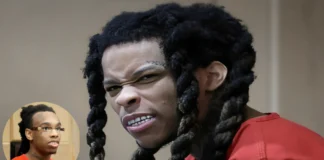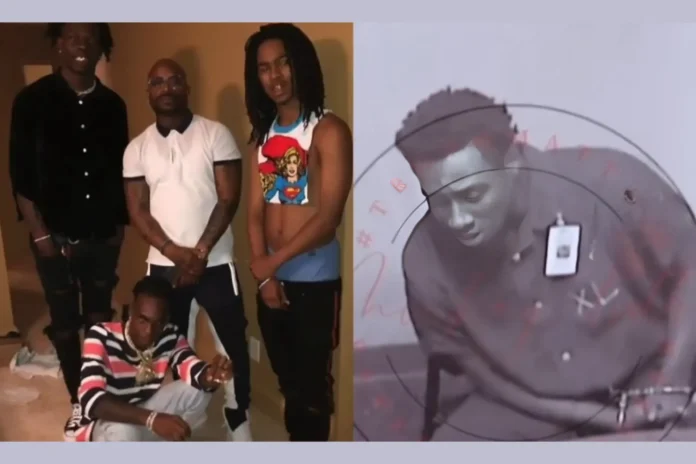
In the raw haze of a South Florida dawn, where grief should carve deep furrows, YNW Melly‘s eyes stayed dry—a detail that has haunted whispers in hip hop’s underbelly for years. The rapper, born Jamell Demons and once a rising voice in trap’s confessional vein, arrived at collaborator Fredo Bang‘s home hours after the October 2018 shootings that felled his YNW crewmates Anthony “Sakchaser” Williams and Christopher “Juvy” Thomas Jr. What unfolded there, according to a close affiliate’s resurfaced interrogation, wasn’t the unbridled rage of betrayal but a quiet that felt too polished, too poised for a man who’d just lost his brothers to supposed street fire. This moment of apparent detachment has fueled ongoing debates about authenticity in the face of tragedy, drawing renewed attention as Melly’s legal saga drags into its seventh year.
The affiliate, a blood relative to the group’s driver Cortlen “Bortlen” Henry, pulled no punches in recounting the scene at Bang’s house. He described pressing Melly for answers amid the shock, only to sense something off in the rapper’s response. This exchange highlighted a stark contrast between expected raw emotion and what came across as restrained performance, setting the tone for broader suspicions about the night’s events.
“I’m like, Melly, man, what the fuck’s going on? Like, what’s going on? He over there, like, trying to fake cry and shit like that. But no tears coming. Like, you can’t fool me, nigga. It was a big show he was putting on.”
Dressed down in a tank top and gym shorts—his club gear mysteriously vanished—Melly sidestepped vengeance for a studio session. This pivot clashed hard against the code of immediate retaliation in their world. The affiliate emphasized how this choice defied the instinctive drive for payback that typically follows such violence. In the interrogation, he tied this behavior directly to doubts about the official story, suggesting it pointed to something more orchestrated than a random ambush.
“If a real drive-by done spun on a nigga, if a nigga done spun on our dog, nigga ain’t gonna be sitting in front of a banging house. We finna get right. We finna go see what it is, do what it do. You feel me? That’s why I say, like, the whole situation’s just shit weird.”
Forensic cracks in the drive-by tale only sharpened these edges, as investigators uncovered evidence that bullets originated inside the Jeep, not from a phantom shooter on I-95, as Melly and Bortlen first claimed to cops. The affiliate’s account ties into that unraveling, spotlighting buried grudges that might explain the calm demeanor observed that morning. These revelations have kept the case in the spotlight, with experts noting that such inconsistencies often unravel tightly knit group dynamics within hip-hop circles.
Sakchaser, a towering 6-foot-5 enforcer known for his fists, had long strained the crew’s bonds—he’d beaten Bortlen in fits of fury and once jammed a gun into Melly’s hand during a standoff that echoed like a dare. The affiliate’s testimony delves into these fractures, painting Sakchaser as a volatile force whose actions built resentment over time. While not excusing violence, these details provide context for why some see the targeting as a boiling point rather than blind fate.
“Sack done so much shit to them boys… He done beat Bortland up in the car, Bortland crying. Like, bro, why you beating on me, bro? Sack done goddamn grabbed the Jerko, put the Jerko in Mella’s hand. Y’all boys want to kill me? Kill me not.”
Whispers of deeper violations, like alleged assaults on Melly himself, floated in the air during the interrogation, adding layers to the motive puzzle. To the affiliate, offering the bully tracked as dark payback, but Juvy’s fate felt like tying off a thread to prevent exposure. This duality—retribution mixed with precaution—mirrors patterns seen in other high-profile rap feuds, where personal scores spill into irreversible acts.
“Y’all don’t know what Sack was doing to me, bro. Like, saying that, like, Sack was breaking his ass or some shit.”
Juvy, the crew’s quiet anchor, embodied a different light amid the shadows—a kind soul eyeing an exit from rap’s grind just days before the shots rang out. He’d shared a blunt with the affiliate, exhaling doubts about the life that had pulled him into its orbit. Yet loyalty kept him glued to Sakchaser that night, positioning him as a potential leak in what the affiliate viewed as a fragile cover.
“Juvie said, bro, I’m finna leave this shit. I don’t wanna do this rap shit. Like, this shit weird, bro, this shit crazy. I just stick to trapping. I go to the streets.”
The affiliate described Juvy as the “hood light,” a beacon of integrity whose death served to safeguard silence in the aftermath. Rumors swirled of Juvy grappling for the gun, his thumb blasted in the fray before the final barrage—a collateral cut in a setup gone lethal. This portrayal humanizes Juvy beyond the headlines, reminding readers of the individual lives upended in the pursuit of street cred and success.
“When the screen say Juvie got whacked, because Juvie was gonna tell. And Juvie wouldn’t leave Sack’s side… Whatever he would’ve seen, Juvie was gonna tell.”
Journalists like me, who’ve sifted through hip-hop’s tangled lore from SoundCloud cyphers to courtroom dockets, recognize how these fractured loyalties echo broader truths within the genre. Melly’s poise that morning doesn’t etch guilt in stone, yet it underscores the peril of performing pain when authenticity is the only currency that endures. Pair these human fissures with irrefutable traces, such as cell phone pings anchoring him to the chaos, and the story demands scrutiny beyond spectacle—honoring victims like Juvy without letting bias blind us to due process.
In an era where artists bare their souls through bars but guard them in crises, this case probes deeper into the tension between vulnerability and survival. The resurfaced interrogation adds fresh texture to a narrative that’s evolved from tabloid fodder to a meditation on trust. As new details emerge, they challenge fans and critics alike to distinguish between artistry and accusation.
Melly’s camp fires back with defiance, insisting the affiliate’s words twist hearsay into heresy and that his Murder on My Mind—a pre-tragedy hit plumbing loss—betrays a heart too scarred for staging. The 2023 mistrial, split by a deadlocked jury, left fault lines intact, with Bortlen’s recent plea deal in September 2025 dangling fresh leverage for prosecutors. As the retrial barrels toward 2027, these echoes of feigned tears could ripple beyond the bench, reshaping how we mourn—and judge—the fallen stars of street sonnets.
Supporters point to Melly’s consistent pleas of innocence, shared through letters and music from behind bars, as evidence of a man caught in circumstance rather than conspiracy. Legal analysts suggest the emotional discrepancies may play into jury sympathy, but only if balanced against ballistic and digital evidence. Ultimately, this saga serves as a cautionary tale for the rap world, where bonds forged in studios can fray under the weight of unspoken resentments.