

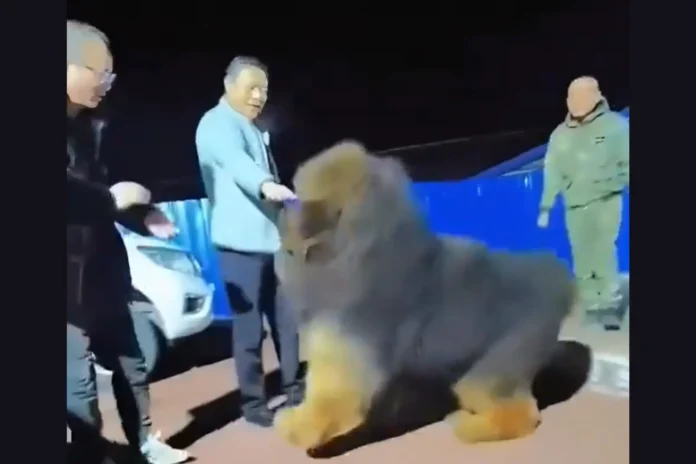
bright lights beaming down on a crowded expo hall in China’s Zhejiang Province, where a huge golden-haired Tibetan Mastiff towers over everyone, its mane looking just like a lion’s. That moment, caught on camera more than ten years back, is popping up all over social media again here in 2025. It’s got people hooked on stories of wild spending sprees. But really, what started out as a badge of honor for China’s rich folks has turned into a warning about trends that fizzle out fast and how misinformation spreads like wildfire online.
Back in March 2014, during the Zhejiang Luxury Pet Fair, this one-year-old Tibetan Mastiff puppy went for 12 million yuan that’s roughly $1.95 million in U.S. dollars back then. The guy who bought it was a real estate developer out of Qingdao, and he got it from a breeder named Zhang Gengyun. Zhang talked up the dog as having “lion’s blood,” which was just a fancy way of saying it had that regal look and top-notch pedigree. Another breeder in the mix, Lu Liang, mentioned in old interviews how these dogs had “excellent genes and real breeding potential” that made them worth every penny.
A tweet from X.
That deal beat out earlier records, like the 2011 sale of a red-coated Mastiff called Big Splash that went for about $1.5 million. These Tibetan Mastiffs, originally watchdogs from the high Himalayan lands, turned into must-have items for China’s new money crowd in the early 2010s. With their heavy fur, massive frames they could hit 80 centimeters high and tip the scales at 90 kilograms and that fierce loyalty, they were perfect for showing off, much like a fancy sports car or a pricey painting.
The whole fad tied into bigger changes in China’s economy, where folks getting rich quick wanted flashy ways to show it off. Breeders such as Zhang pitched them as smart buys, thanks to those premium bloodlines that could rake in big fees from breeding. One expert back then put it this way:
“Having a Tibetan Mastiff was pretty much like owning a high-end car or some exclusive artwork.”
Still, all that buzz ignored the real work involved these dogs cost anywhere from $200 to $800 a month just for basics like food and vet visits, and they live 12 to 15 years. These days, people on social media are blown away by how big the dog looks in those old clips, though plenty crack jokes about whether it’s worth that kind of cash. It really points out how views on pets and splurging differ across cultures. One commentator nailed it by saying it shows
“differences in cultural values regarding pets and luxury goods.”
Then, around the middle of the 2010s, everything crashed. Too many dogs on the market, slower economy, and rushed breeding that messed up the lines it all tanked the prices. Stories came out about sad cases where these high-value pups ended up abandoned or sold off for next to nothing, like $5, or worse, headed to slaughter. A local specialist told reporters in 2017,
“The sharp decline in the price is one of the reasons behind the rise in homeless Tibetan dogs.”
That fall-off brings up tough questions about treating animals like commodities. Digging into it as a reporter, you see how these hype-driven markets can really hurt the dogs’ well-being, with folks calling out how chasing status skips over things like good genetics and proper lifelong care.
Looking back, this tale really drives home how shaky these luxury crazes can be in growing economies it’s a thing you see in stuff like property or collectibles too. With everyone worldwide jumping on these stories via the internet, sorting out what’s real from what’s blown out of proportion is more important than ever.
