

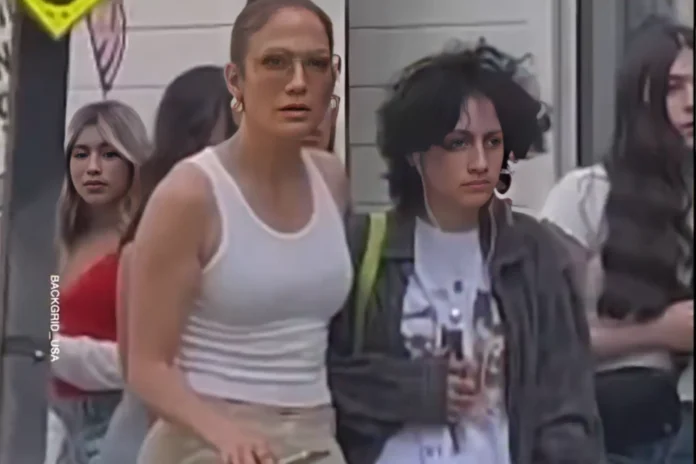
Lede A short video from the Broadway premiere of Othello went viral after Jennifer Lopez, 56, appeared to confront a paparazzo who shoved a camera between her and her teen, Emme Muñiz, 17. Lopez’s sharp reaction widely described online as “mama bear” sparked a debate about photographers and minors.
The footage, taken outside the Ethel Barrymore Theatre in New York during the Othello opening on March 23–24, 2025, shows Lopez and Emme leaving the venue when a photographer’s lens is pushed very close to the pair. In some uploads you can see Lopez step forward and shout at the photographer while Emme stands beside them. Multiple bystander uploads and longer clips on YouTube and social platforms show the same basic sequence. Entertainment outlets that covered the outing note Lopez later posted glowing photos of the night, calling Emme “the best date ever.”
A tweet from X.
In the United States, photography of individuals in public is generally acceptable the line is reached once behavior itself becomes harassment, trespass, or a safety issue. California has a law from 2013 intended to avert paparazzi harassment of minors under age 16 and extended penalties where behavior “seriously alarms, annoys, torments, or terrifies” a minor but the law has limited reach and could not be applied herein (Emme is age 17 and the event took place in New York). New York lawalso allows photography in a publicly accessible location while denying civil remedies to certain commercial or harassing intent.
In the world, rules differ the UK’s Editors’ Code has tighter ethical boundaries around child photography and insists on a parent’s permission in the majority of cases, while Australia allows photos captured publicly but has recourse at law (including injunctions) should publication cause harm. These differences lead publications and the general populace to gauge occurrences like this differently.
Reactions online split. Some praised Lopez for protecting a teen echoing Page Six’s line that she “went mama bear” while others criticised any follow-up behaviour. Commentators also urged restraint even legal photography can feel invasive, especially when it targets children. Responsible coverage has avoided amplifying harassment of Emme and used their reported they/them pronouns.


The clip is a clear snapshot of a recurring tension legal rights to photograph in public versus the ethics of pursuing minors for pictures. Do photographers have freer rein in public, or should stronger protections follow especially for celebrity children? The Lopez-Emme moment shows why the debate matters law, press codes and public expectations don’t always line up, and many viewers now ask whether better guardrails are overdue.
