Fewer Americans are drinking alcohol than at any point in nearly 90 years, the new Gallup surveys indicate. Just 54% of American adults indicate consuming alcohol, the lowest level since Gallup has tracked the practice in 1939 and the first to fall beneath the prior low of 55% in 1958.
The rate is down dramatically from 62% in 2023 and 58% in 2024, reflecting what experts describe as a unprecedented cultural and public health turning point.
“There has never been such a decline in prevalence for such a short-term duration,”
said George F. Koob, director of the NIAAA (National Institute on Alcohol Abuse and Alcoholism).
Since Prohibition-era regulations ended, the American public has had their beverage consuming habits tracked in Gallup’s annual Consumption Habits Survey, July 7–21, 2025. Peak alcohol use occurred in the late 1970s and early 1980s when use reached over 71%. Use has remained over 60% for most of the past quarter-century.
The current downturn spans nearly every demographic. Men’s drinking rate fell 5 points to 57%, while women dropped 11 points to 51%. Among non-Hispanic White adults, the share fell by 11 points; rates among people of color remained relatively stable at about 50%.
For the first time since Gallup began tracking public opinion on alcohol’s health effects in 2001, a majority of Americans (53%) say even moderate drinking one to two drinks a day is harmful. That figure has surged from just 28% in 2018.
“This is a tremendous shift in thinking,”
said Dr. Scott Hadland, Mass General for Children’s chief of adolescent and young adult medicine.
“A generation ago, people were told moderate drinking could be heart-healthy. Now, the evidence points clearly to risks, including cancer and liver disease.”
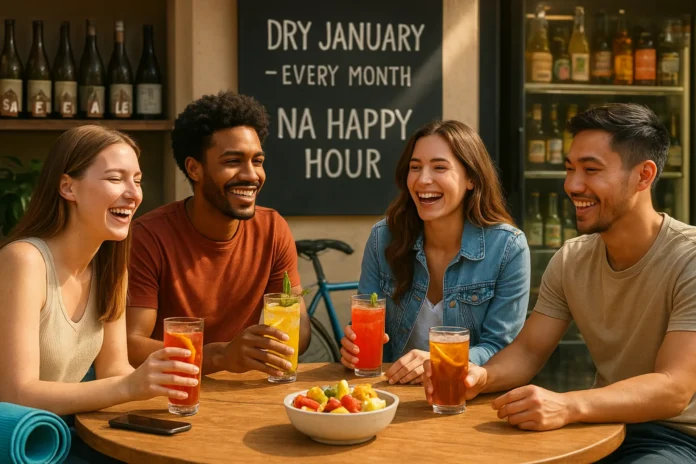
The sober-curious movement, the social-media phenomenon of the wellness-conscious, and events like “Dry January” have brought abstinence from alcohol into the mainstream. Gen Z and young Millennials areespecially at the forefront of the retreat: not even half of adults under the age of 35 still consume alcohol, versus 59% two years ago.
Even among drinkers, consumption is falling. Only 24% reported having alcohol in the past 24 hours down from 32% two years ago and 40% said it had been over a week since their last drink, the highest rate since 2000. The average number of drinks per week has dropped to 2.8, the lowest since 1996.
Gallup notes that beer remains the most common choice (38%), followed by liquor (30%) and wine (29%). Wine is particularly struggling to attract younger consumers.
Alcohol sales have reflected the change. According to NIQ data, 2024 saw declines in beer/cider (-2.9%), spirits (-2.3%), and wine (-5.3%), while ready-to-drink cocktails grew modestly. Non-alcoholic options surged, with sales up 27% in 2024 to $829 million, including a nearly 25% jump in NA beer sales.
The wine industry has been especially hard-hit, with producers warning that generational disinterest may reshape the market for decades.
This distinction matters: sales data and alcohol-related death rates can move in different directions. For example, alcohol-related liver cirrhosis deaths have risen in recent decades, indicating heavier use among some who still drink.
A tweet from X.
Public health officials see opportunities for prevention. The U.S. Surgeon General has called for warning labels linking alcohol to cancer risks, a step that could accelerate change. If current trends continue, industry analysts predict a permanent shift in U.S. drinking culture one where non-alcoholic alternatives play a much larger role.
“This isn’t just a blip,”
Dr. Hadland said.
“It’s a generational reset in how Americans think about alcohol, health, and social life.”