

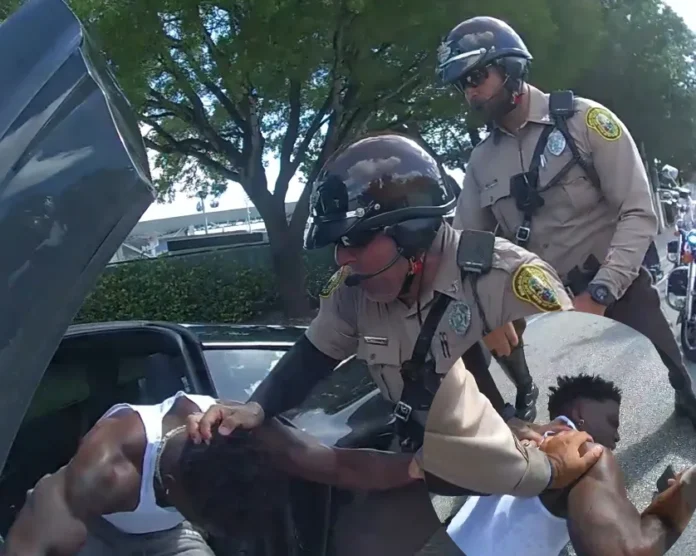
The Miami-Dade Police Department has released the body camera footage of Miami Dolphins wide receiver Tyreek Hill’s detention during a traffic stop on September 8, 2024. The footage, which runs over 105 minutes, has generated an avalanche of controversy regarding police behavior and treatment of individuals during routine stops.
The MDPD released the body cam footage, stating it is committed to a complete and transparent investigation regarding this incident. In it, we find a motorcycle officer chasing down Hill’s striking McLaren 720S sports car and commanding him to pull over. The interaction escalates fast as Hill lets down his window to express frustration with the officer’s approach. Don’t knock on my window like that,” he says, setting the pace for what becomes a heated debate.
The officer asked Hill why he didn’t have a seatbelt and had his window up. After being repeatedly asked, Hill became increasingly irritated. “Give me my ticket, bro, so I can go. I’m gonna be late. Do what you gotta do,” he says as he rolls up the window again.
The scene escalates sharply: more police arrive, demanding Hill roll down the window. When he doesn’t do that, the officers drag him out of his car and fling him into the ground. “What part of get out do you understand?” the officers are yelling in the body cam.” as they assert their authority.
The grainy footage lets in a lot of details of chaos. A visibly traumatized Hill protests that he has “just had surgery on his knee” while officers continue to take control of the situation. Bystanders watch in horror as Hill is frogmarched to the sidewalk. The confrontation increments further when fellow Dolphins player Calais Campbell shows up, trying to de-escalate the situation, only to find himself cuffed by police.
The moment was both heartbreaking and disturbing for many viewers, as he can be heard begging, “I’m just being a Black man, that’s it,” while being restrained. For many critics, the officers had gone overboard, and during the scuffle, one officer even told Hill to “stop crying.”.
As things escalated, Hill said in a fit of anger: “I can’t run. I’m not gonna run, bruh. I promise you I’m not gonna run, s—.” He reflected on the gravity of it all when he said, “If I wasn’t Tyreek Hill, lord knows, I probably would have been like-worst-case scenario, I would have been shot or would’ve been locked up.” This sentiment goes deep, with many looking at the incident as a reflection of broader systemic issues within law enforcement.
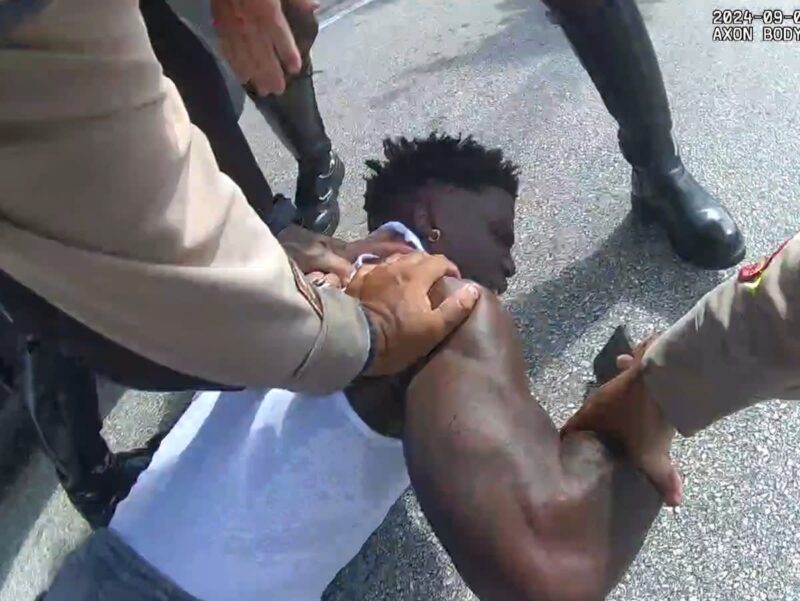
Hill’s teammate Calais Campbell tried to interfere and was detained by the police, too, juxtaposed with multiple officers dealing with the two players on the scene. Hill was stopped initially for reckless driving, and according to a senior law enforcement source, authorities felt Hill was uncooperative, which is why he was detained. At one point, Hill asked the police to just give him a ticket and let him go, which also showed that he was in a hurry.
Hill’s agent has denounced the treatment as “completely unacceptable”; Hill himself is reportedly considering filing a lawsuit. The MDPD has relieved one officer from street duties pending an investigation. Police Director Stephanie V. Daniels adds that such matters must always be handled regarding accountability and transparency.
Hill took to social media with a powerful move, saying in simple words in his post, “Let’s make a change.” This means he wants systemic changes in handling such situations and finds resonance with many who support him.
The Dolphins organization has publicly criticized the police action as “overly aggressive and violent.” They added that accountability and transparency in the continuous investigation are needed. The Miami-Dade Police Department has opened an internal affairs investigation, and one officer involved in the incident was placed on administrative duties pending the investigation.
Hill‘s attorney says they are pursuing “all legal remedies” over what they refer to as excessive force during the encounter. The situation has not only affected Hill on a personal level but also brought on broader questions of how individuals are treated during stops, which triggered racial conversations and public figures. Since this incident, Hill has come out and spoken about the depression and emotional pain this has caused him. He addressed his concern about his situation if he weren’t a well-known athlete: “What if I wasn’t Tyreek Hill? Lord knows what those guys would have done.”
Many can relate and take solace in this; it is just another clear example of racial and status-based inequity in treatment. As the investigation continues, the public rallies around Hill for the need to reform the way police do business. The publication of this video has led to more than the maintenance of Hill’s case; it has opened a more extensive discussion on policing accountability and reform.
